Impact4Publish
Curatorial publishing
impact4publish
Curatorial publishing is understood here not as a rigid problem of layout, but as editorial composition from text, image and rhythm. The software is aimed at magazines, artists' books, exhibition catalogues and other formats in which content comes first and design is developed out of it.
Content and editorial structure
Many classic DTP systems treat every paragraph alike. Editorial publications work differently: a lead needs a different presence from running text, a pull quote a different dynamic from a quotation, a change of section a different rhythm from a simple paragraph break.
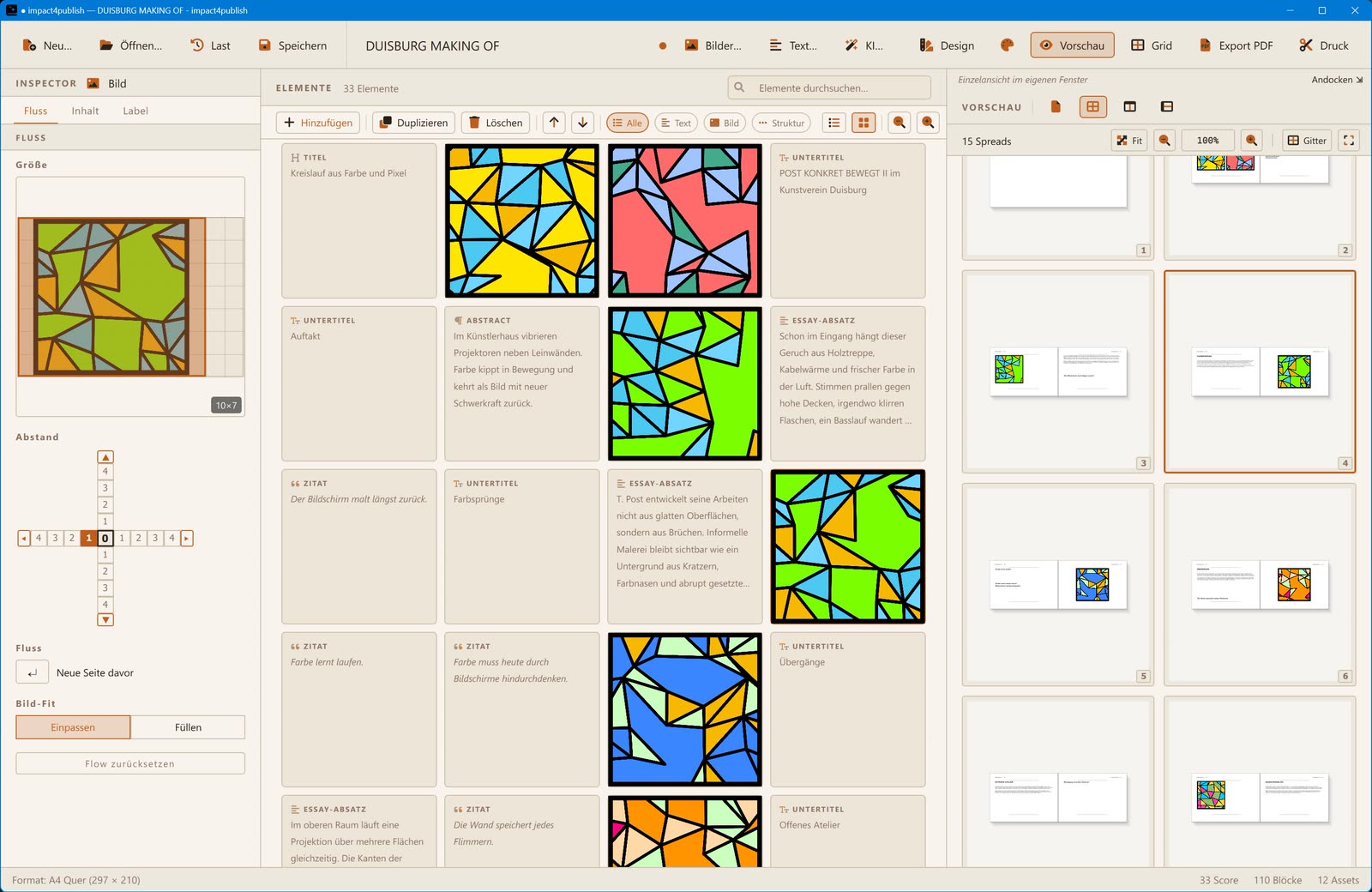
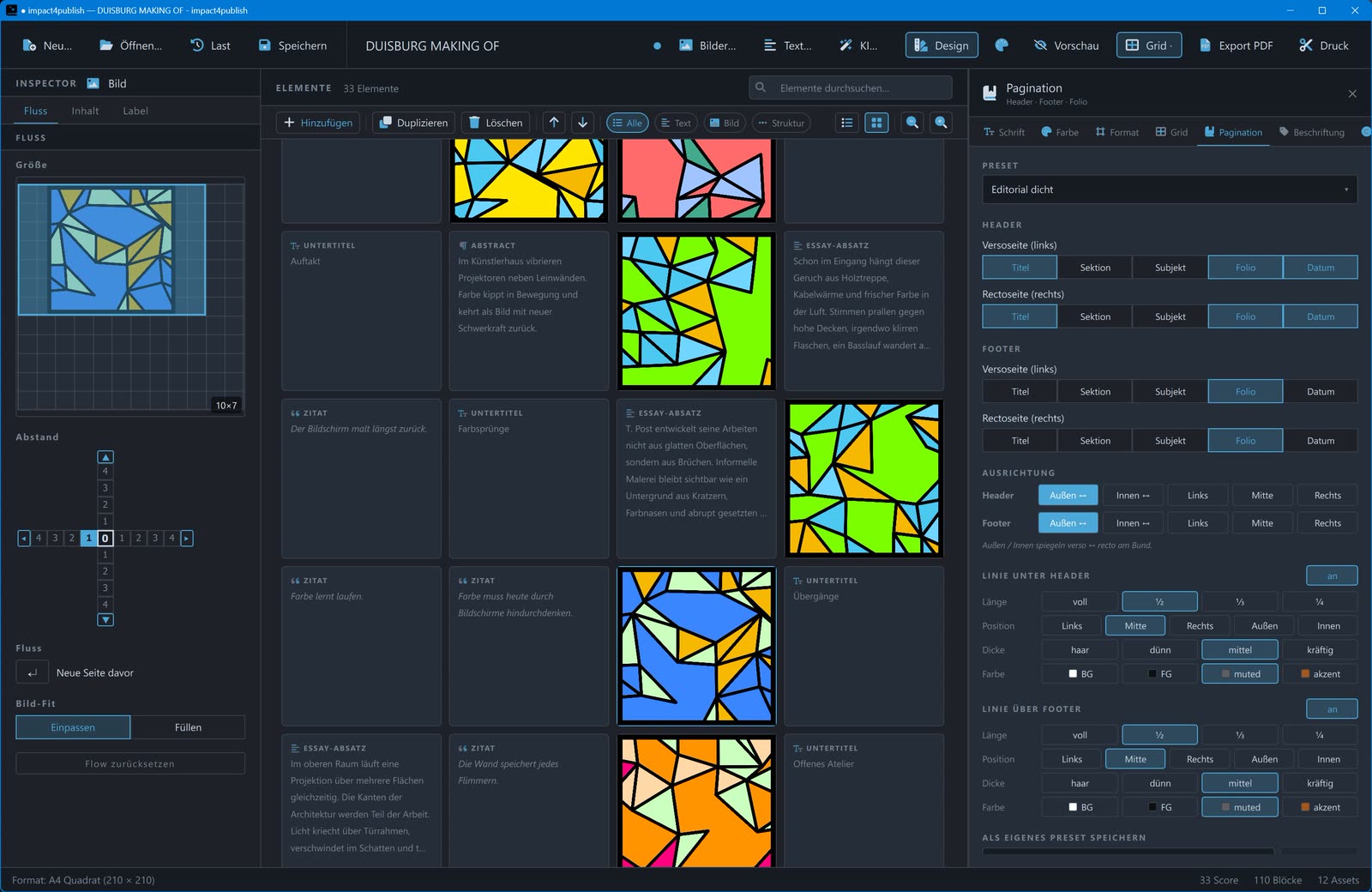
impact4publish reads content semantically and translates it automatically into editorial structures. Title, lead, section, body, pull quote or closing each produce their own typographic and spatial behaviour within the layout. A publishable structure therefore arises while writing, without every page having to be composed by hand.
Workflow
The working process stays deliberately simple. Instead of API connections or cloud workflows, the clipboard is enough.
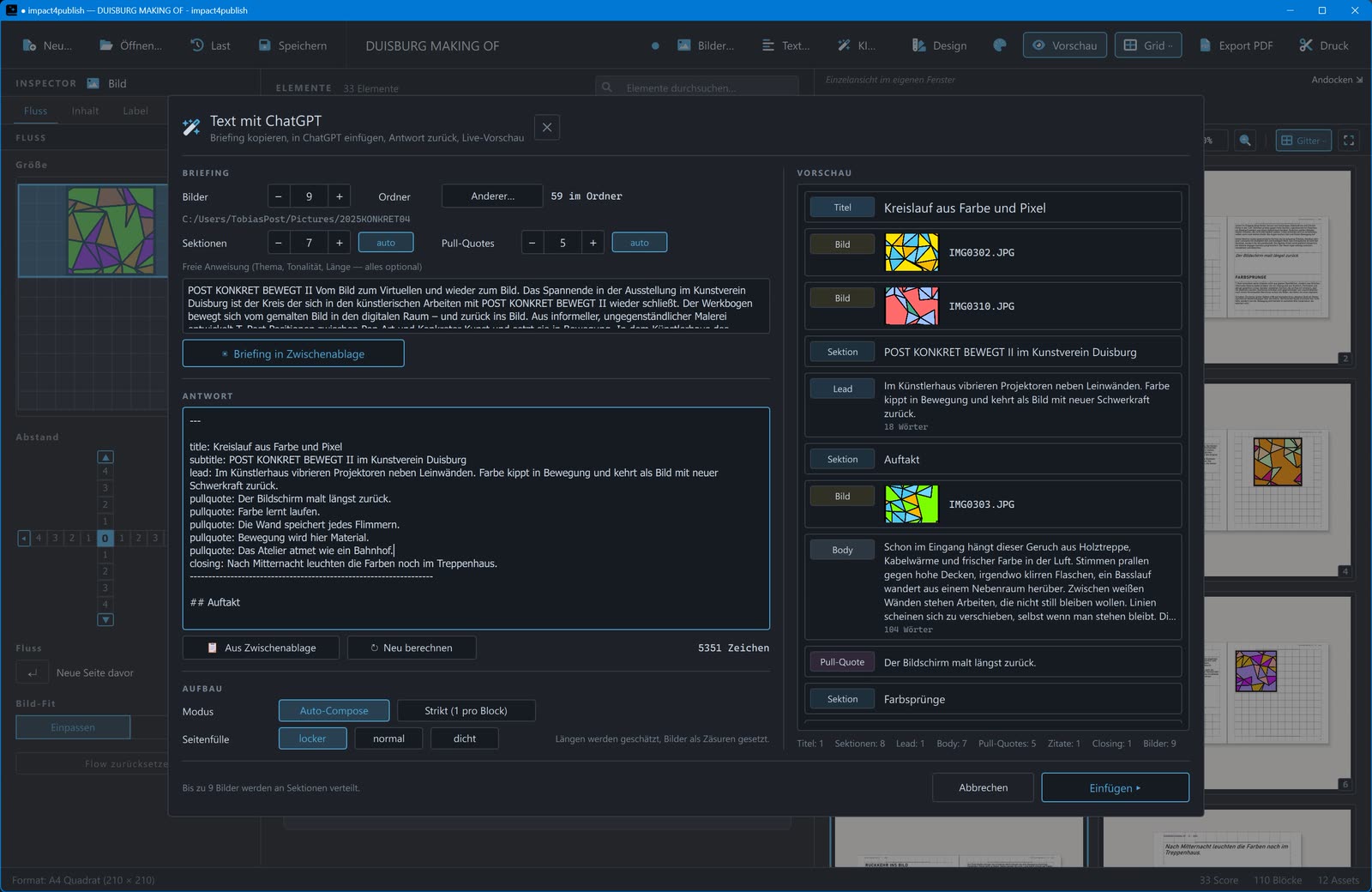
From within the software a brief is generated that defines scope, structure and quantity of text. This brief can be pasted into ChatGPT or other AI systems. The answer comes back as structured Markdown and is analysed immediately. As soon as it is pasted in, the preview shows which blocks arise and how the publication is built.
The separation of text generation and layout is a deliberate choice. The AI concentrates on language and structure, while impact4publish takes over the editorial composition.
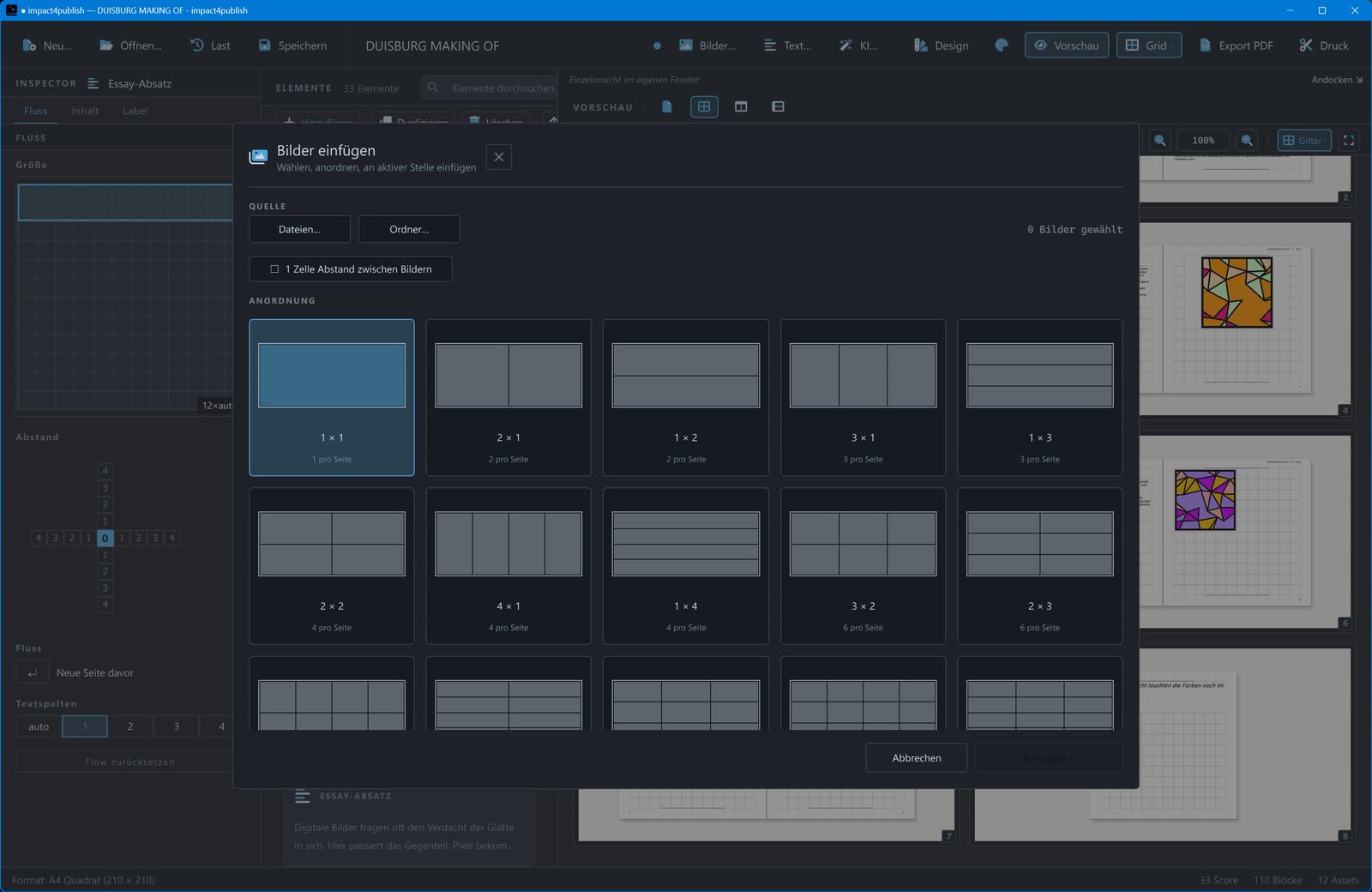
Organising images
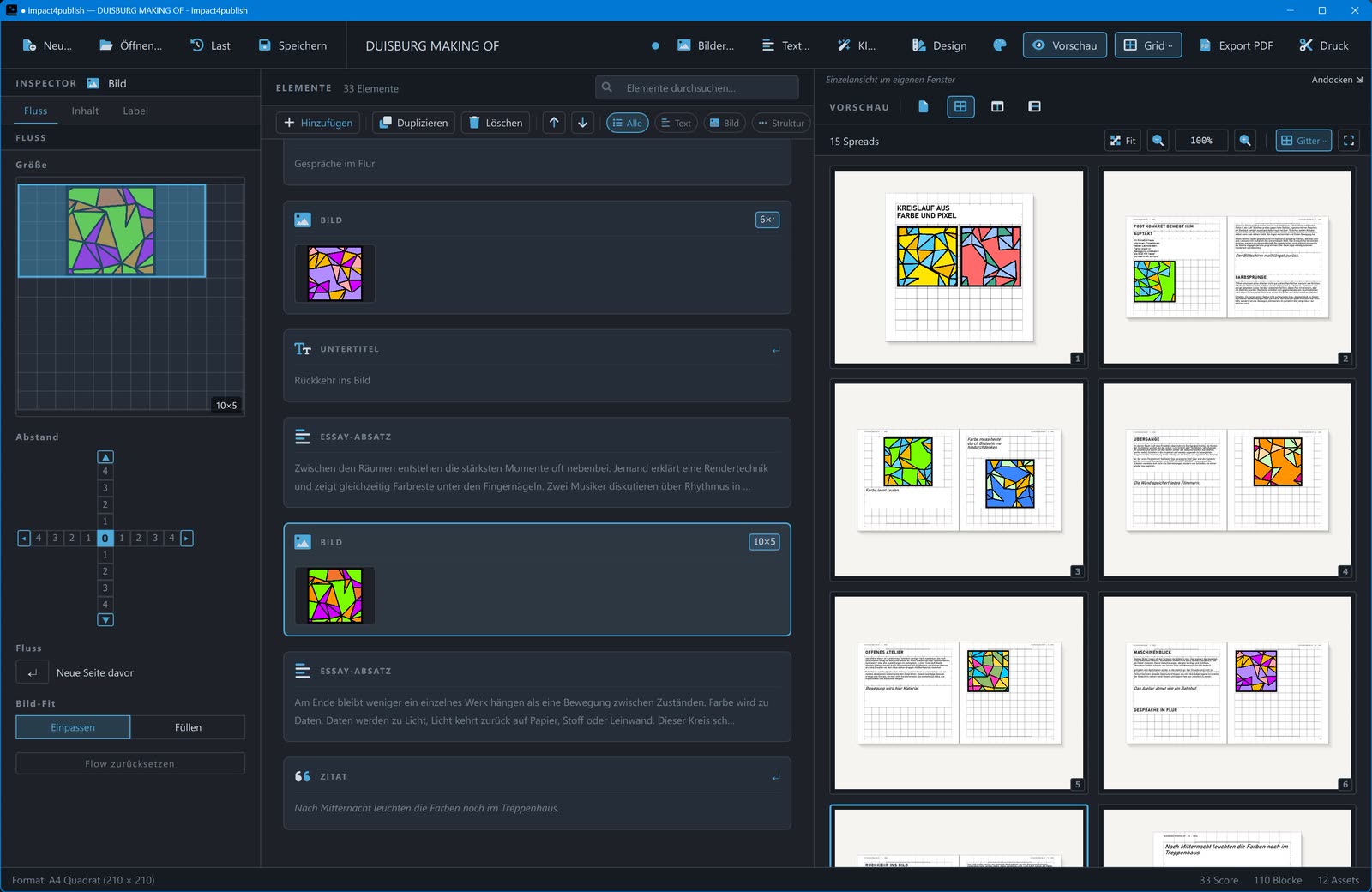
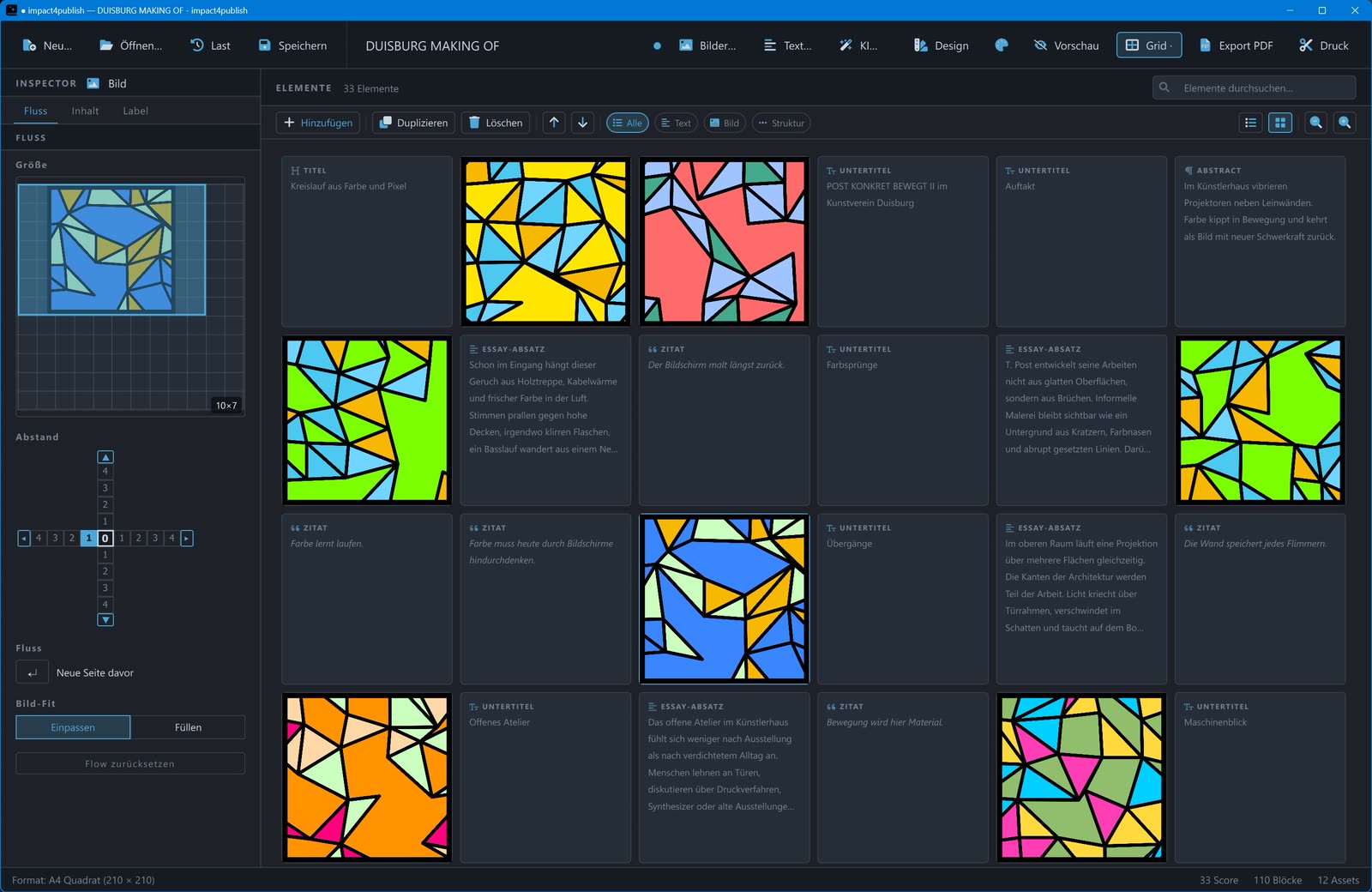
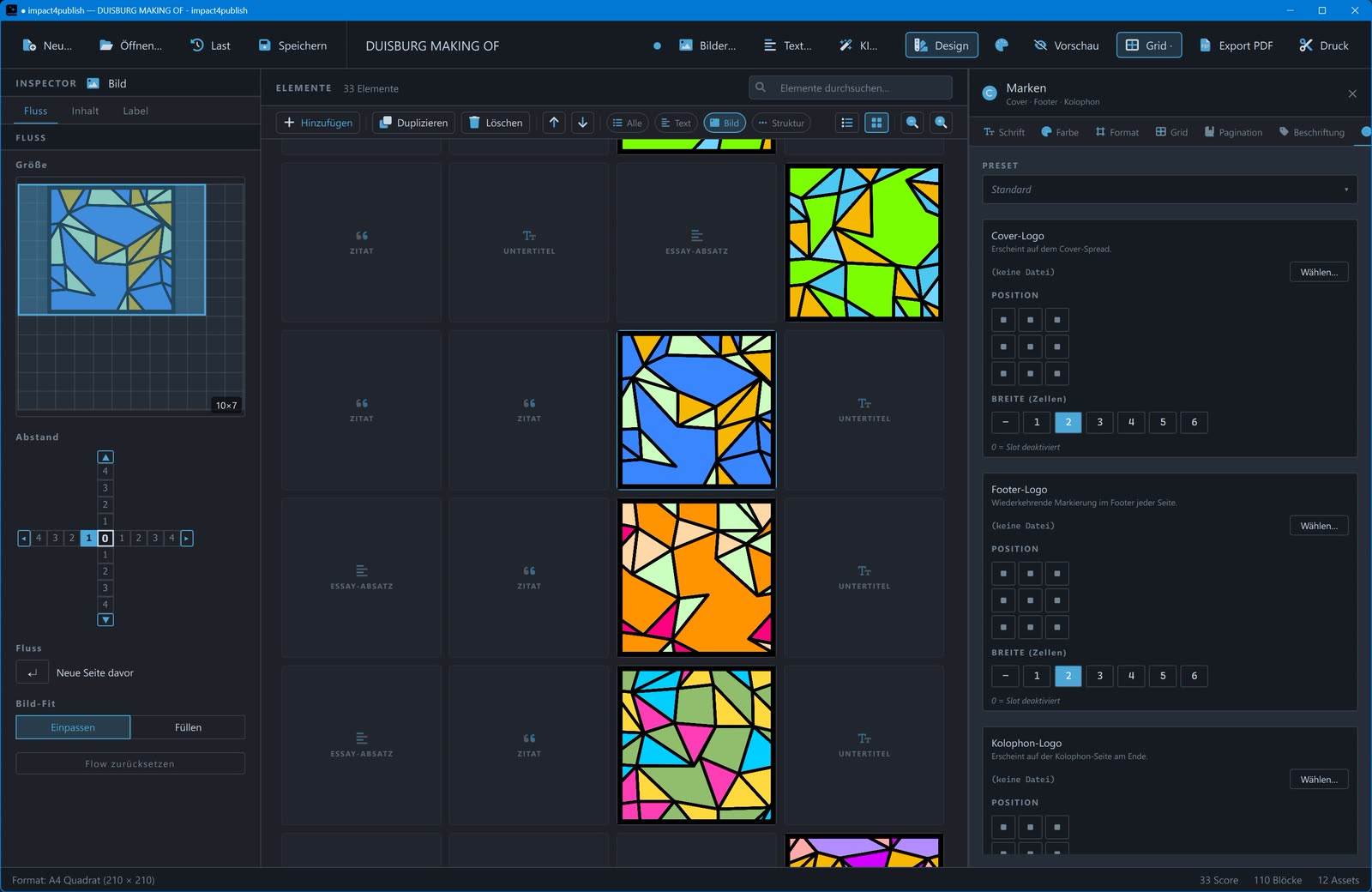
Images are managed independently of the text. Instead of placing them one by one, selecting a folder is enough. The software distributes image material automatically along defined anchor points within the publication and produces an even visual dramaturgy from it.
Images are stored content-addressed within the project, which avoids duplicate copies and lost paths. Placement follows the structure of the publication rather than manual work on pages.
Layout system
A two-stage layout system works in the background.
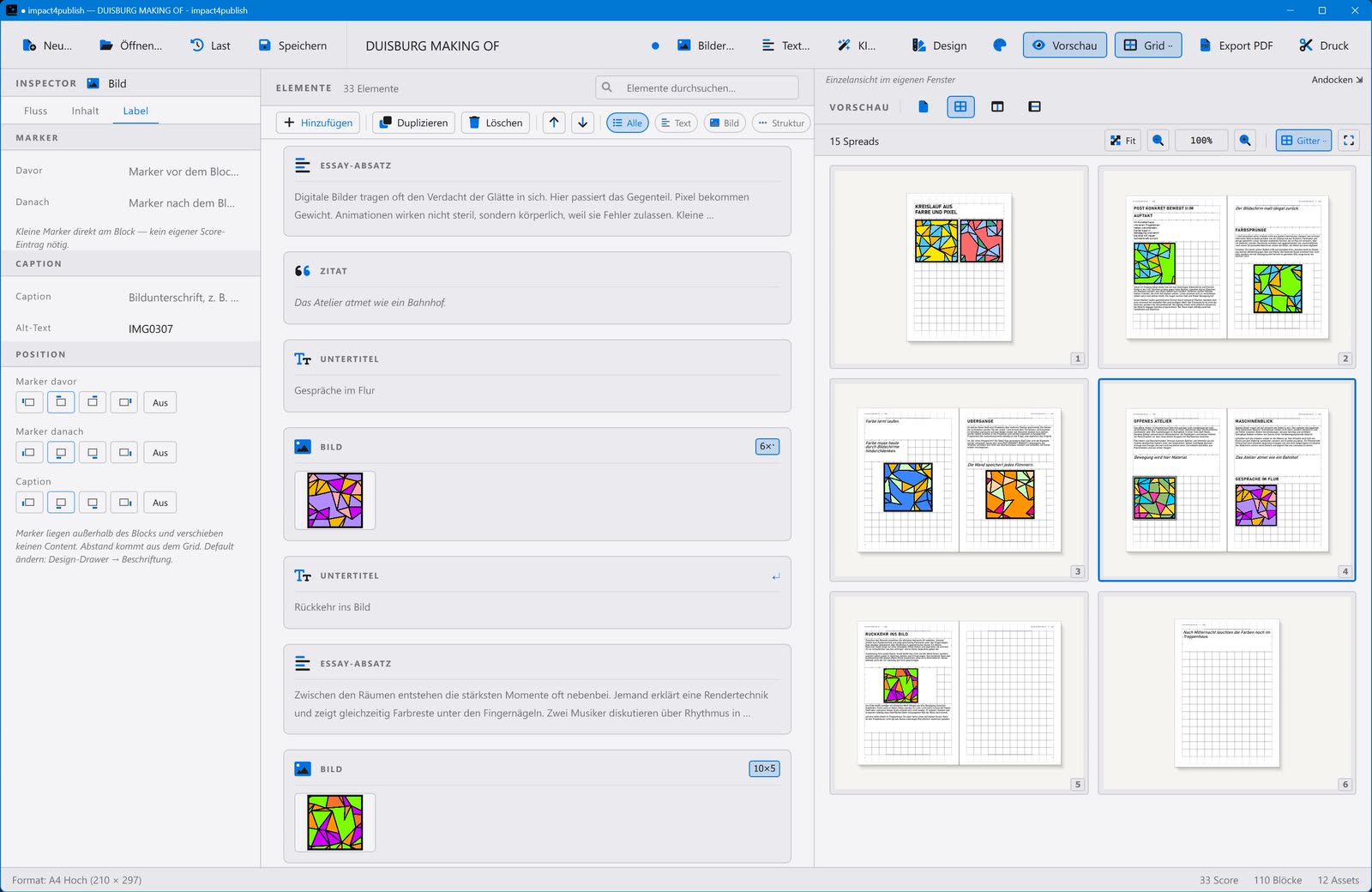
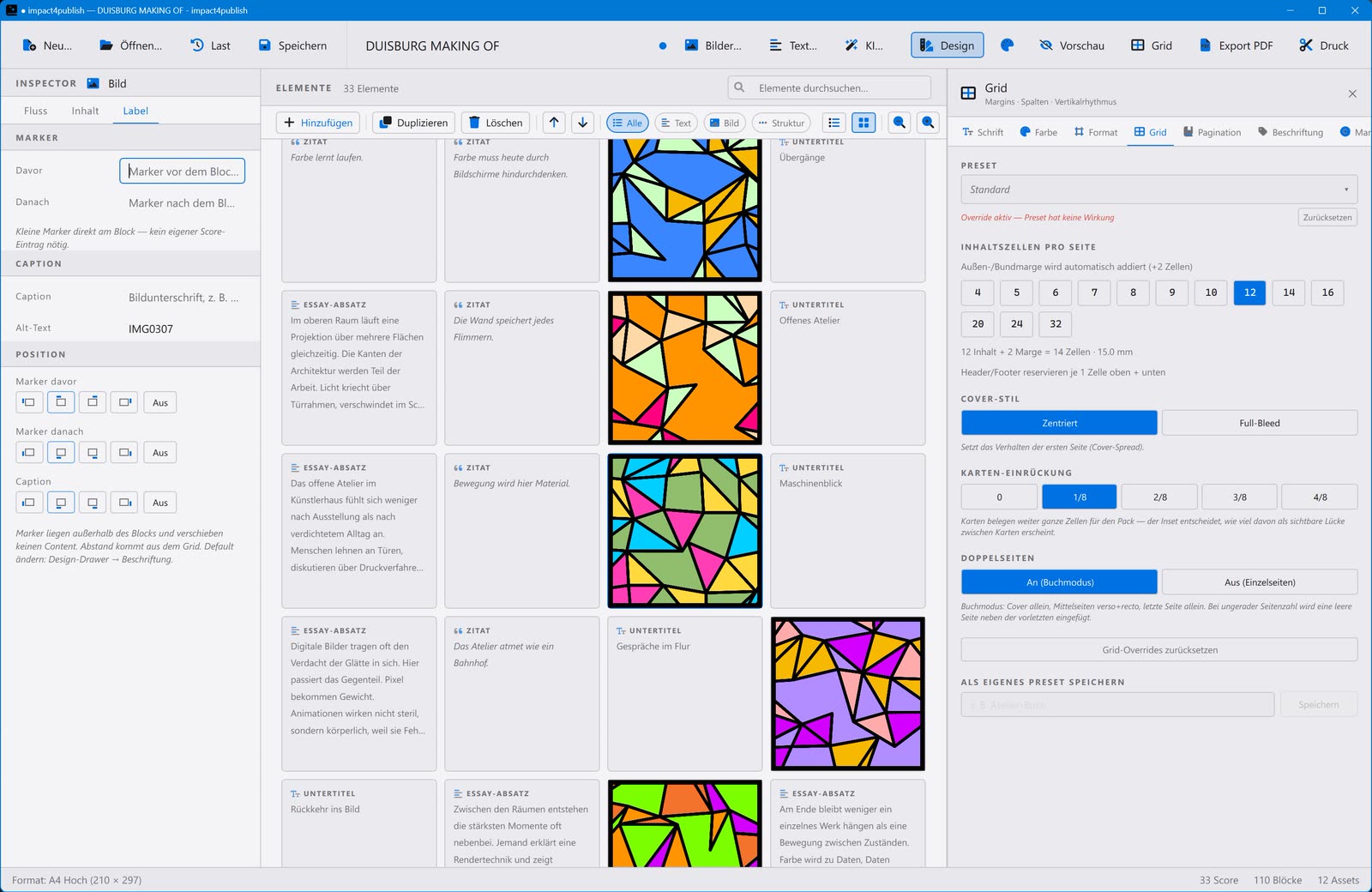
A cell grid defines the typographic grid and the spatial order of the page. On top of it sits a flow paginator that organises texts, images and editorial elements dynamically within the available space.
Different levels of density change the character of the publication - from open, quiet pages to dense multi-column runs.
Editorial languages
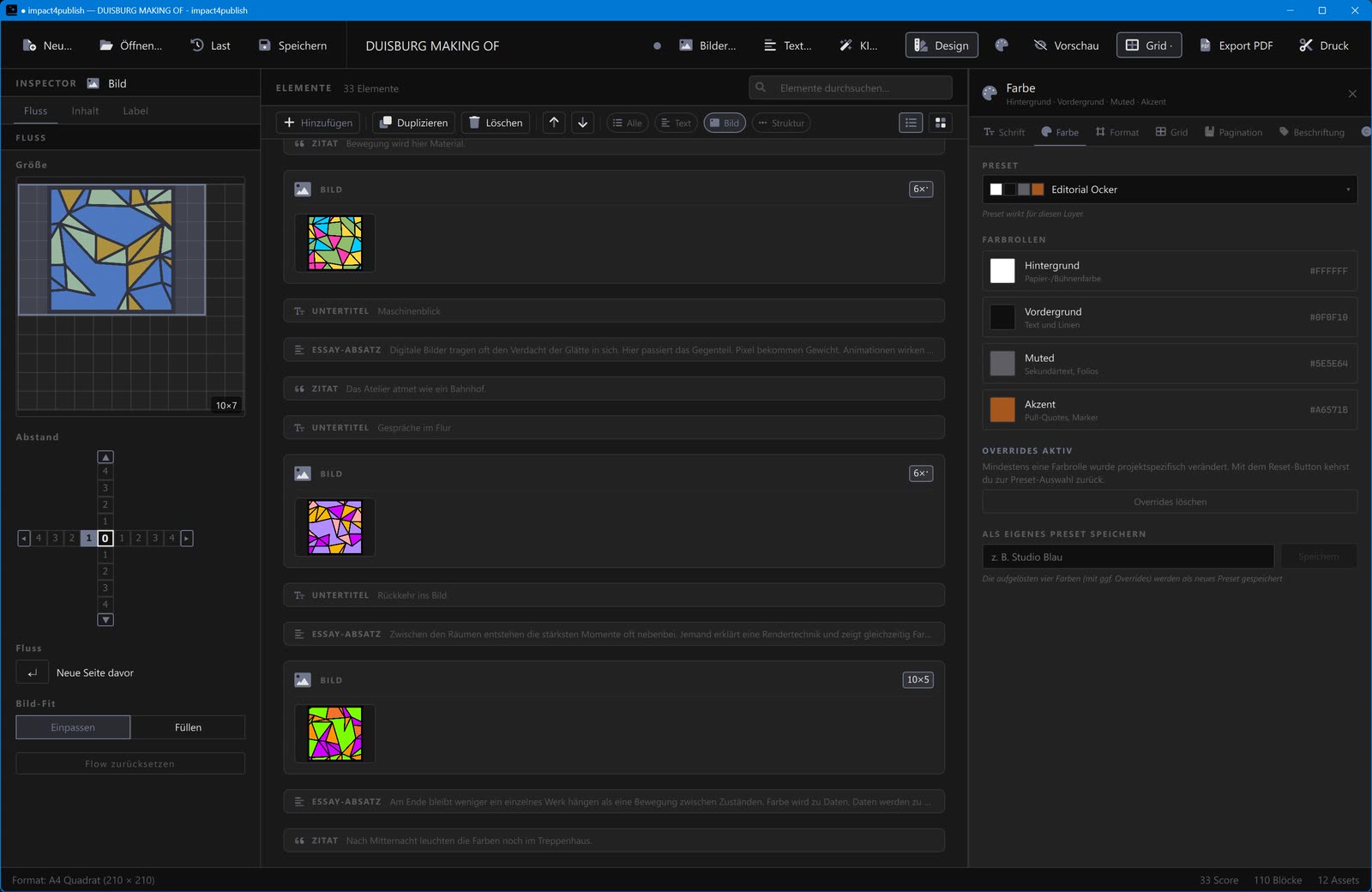
Several typographic systems are available for different forms of publication. These editorial languages define typeface, column logic, white space, rhythm and annotation as coherent systems of design.
The manuscript itself remains unchanged. Changes to language and design take effect on the composition immediately.
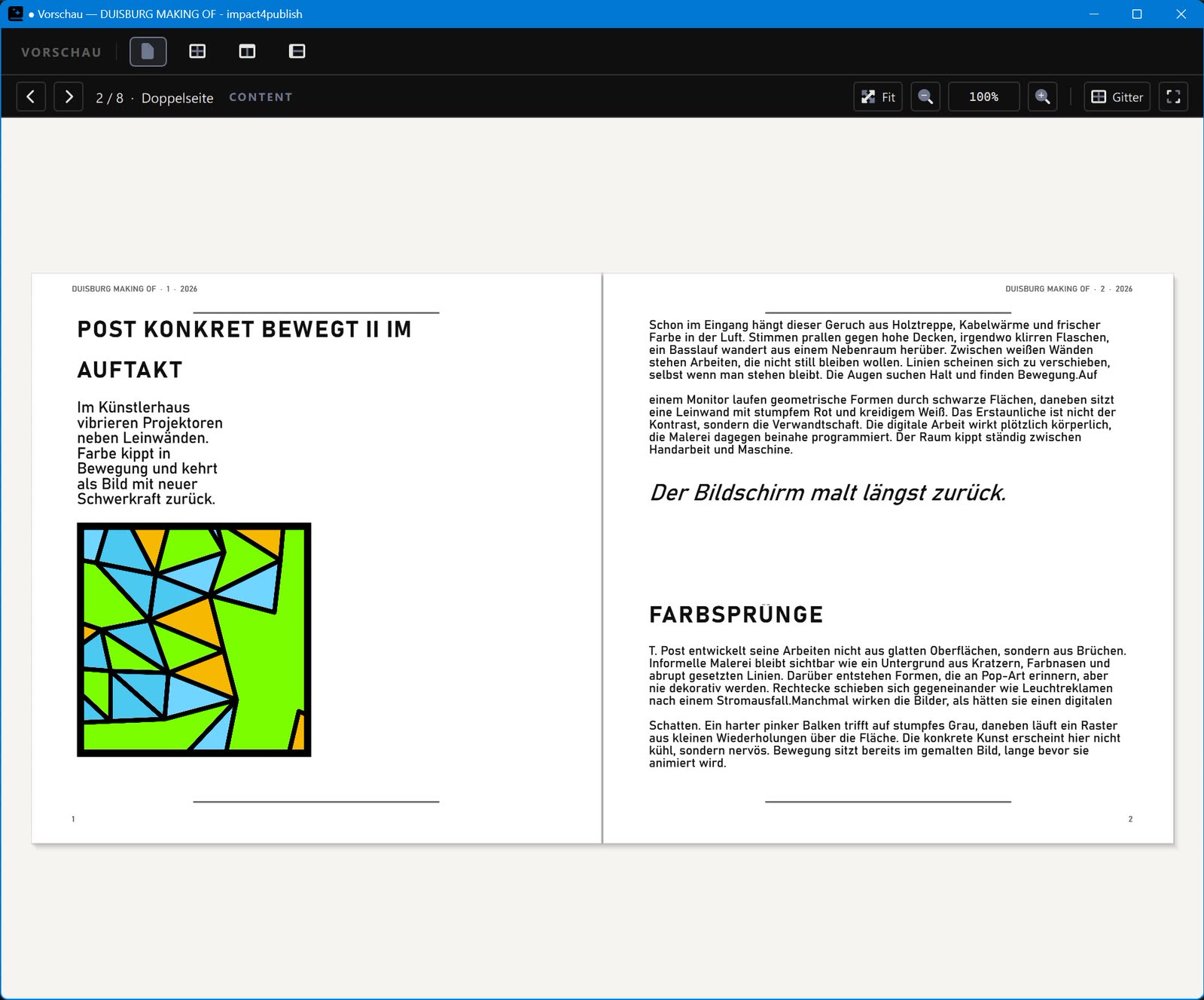
Live preview
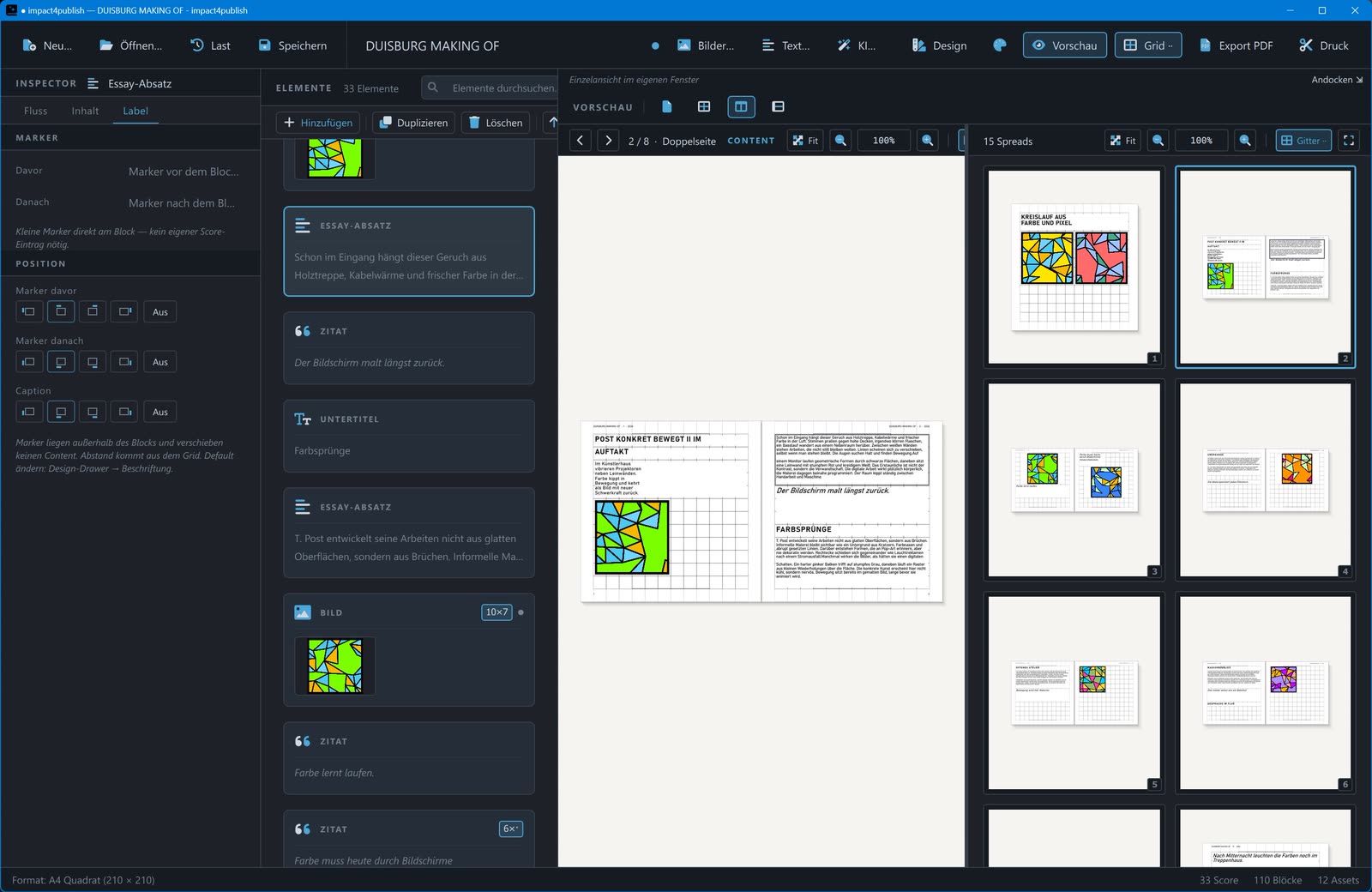
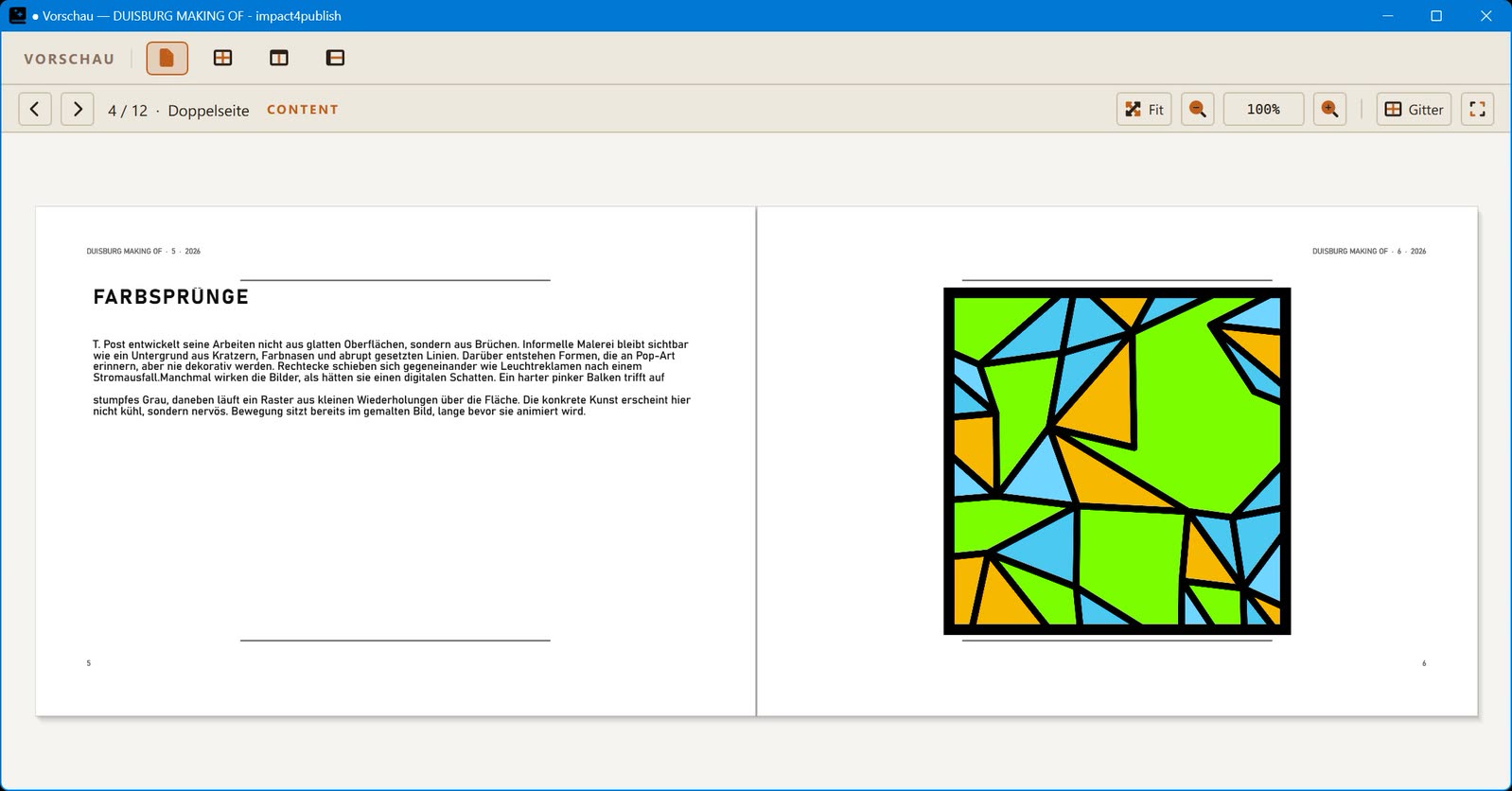
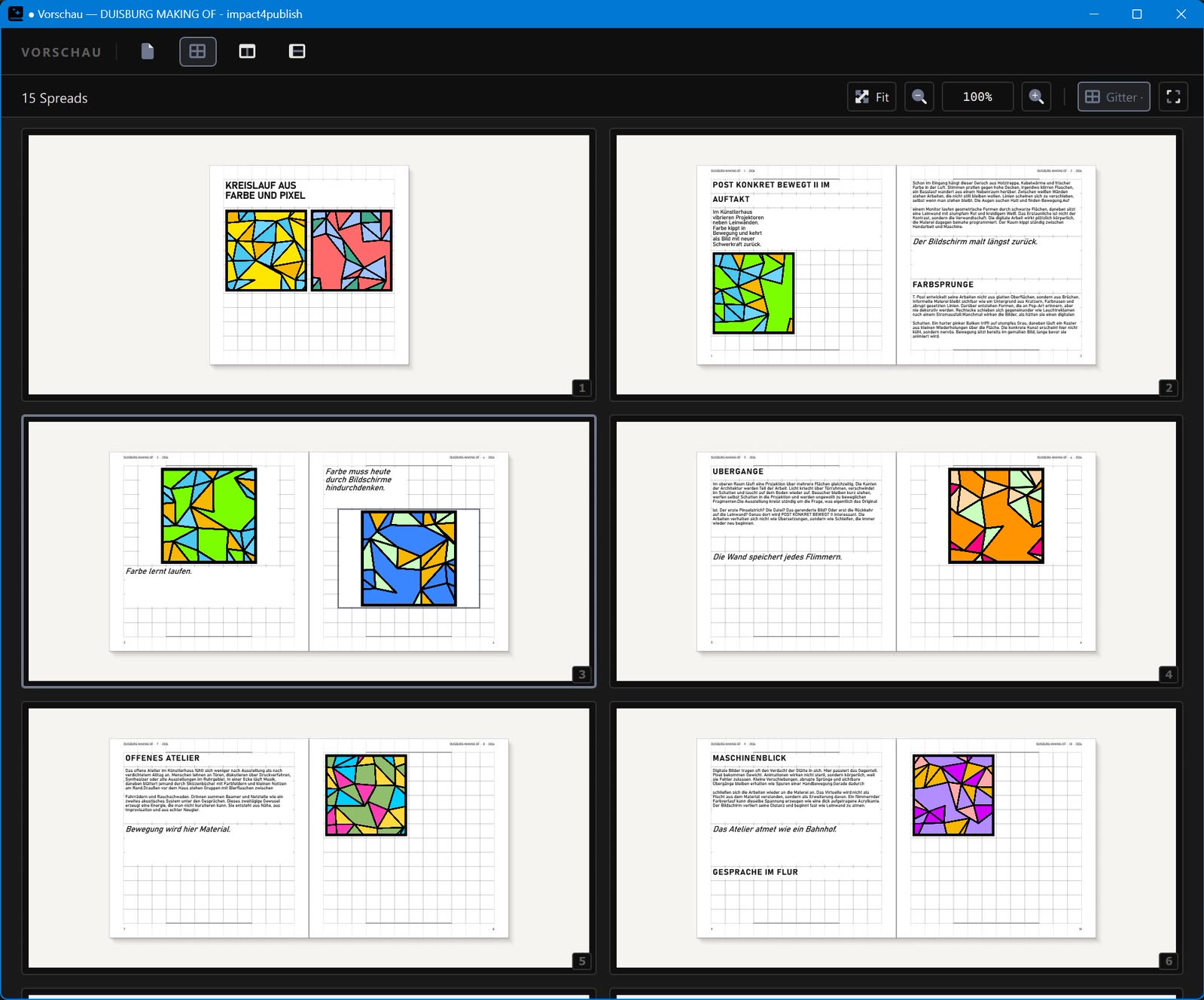
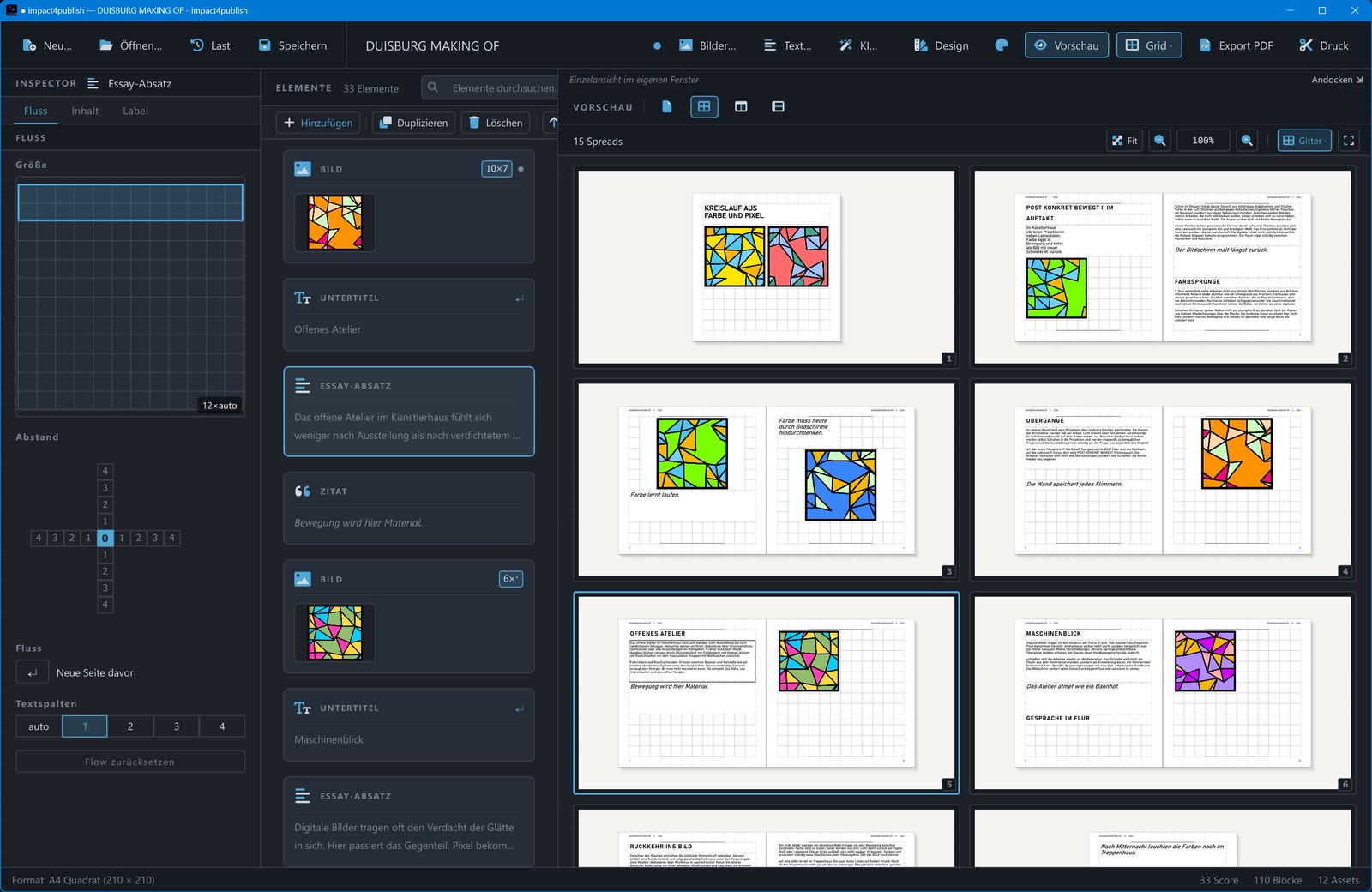
Changes to content, typography or pagination appear immediately in the preview. Spreads, overviews and detail views update without a separate export step.
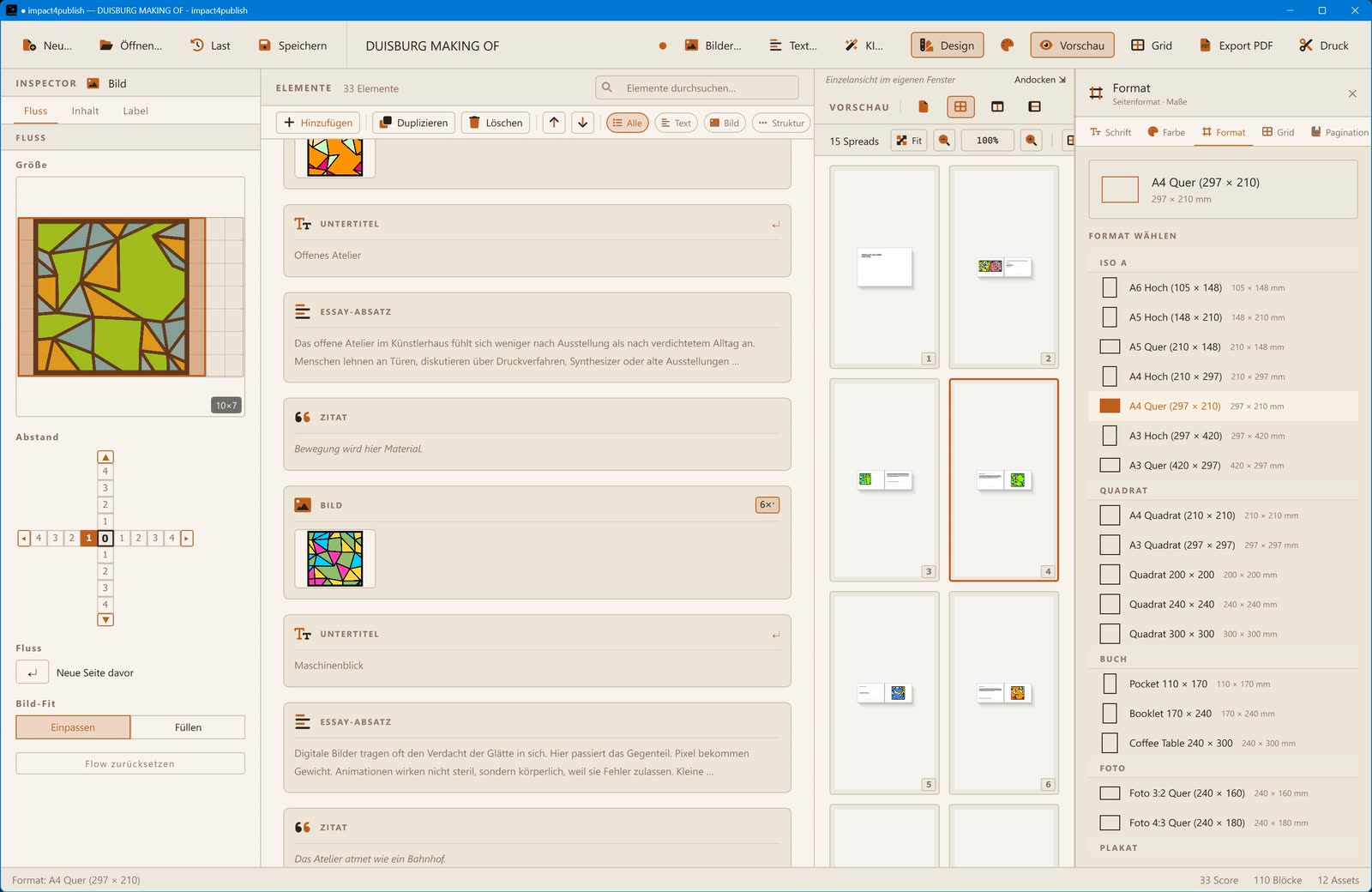
The design drawer gives direct access to typography, grid, colours, pagination and annotation. Adjustments become visible at once.
Manual intervention
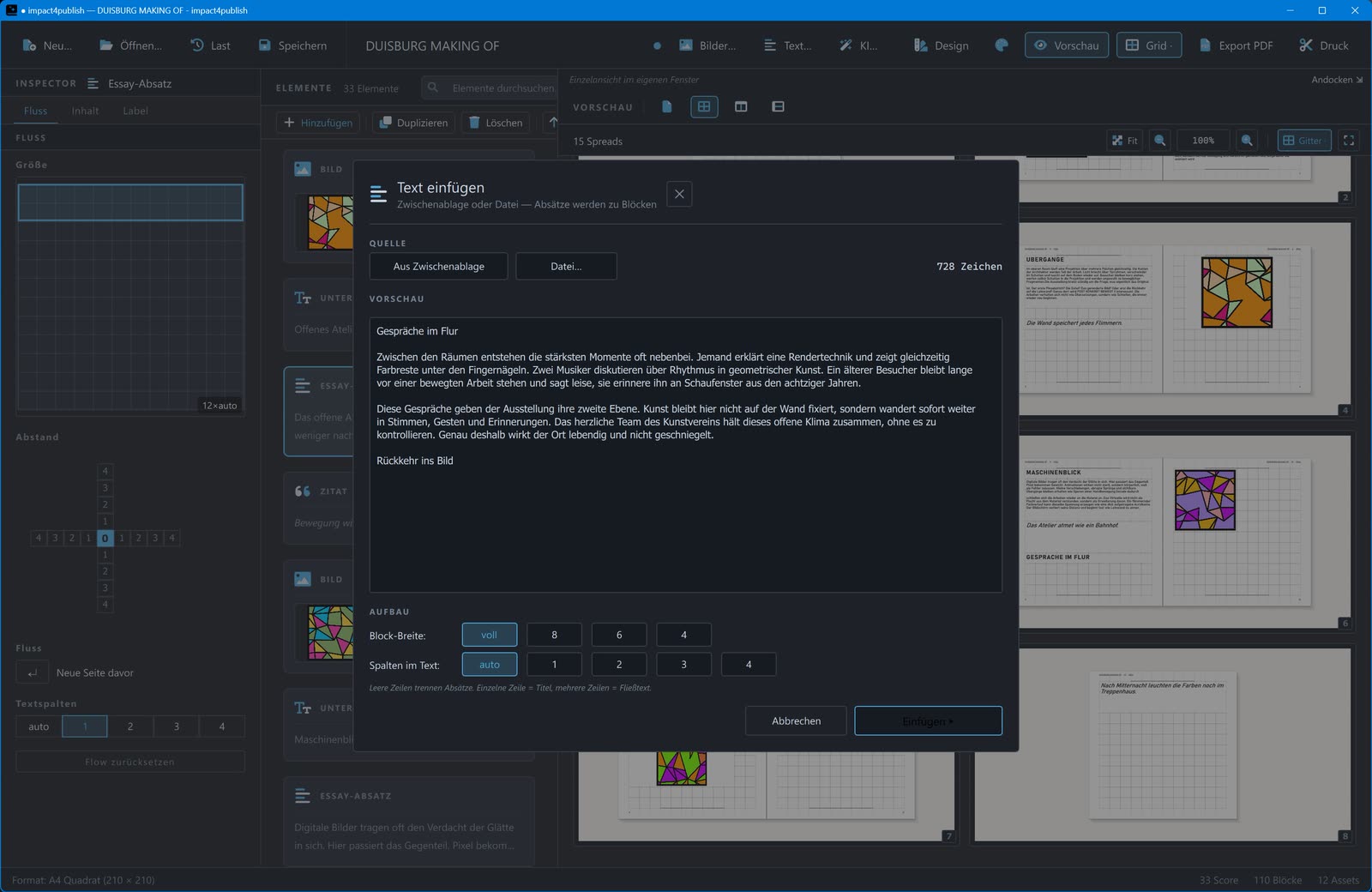
The automatic composition can always be overridden. Individual blocks can be adjusted deliberately, for instance in column width, multi-column setting, bleed behaviour or annotation.
Automatic processes are meant to support editorial work, not to replace it.
Export
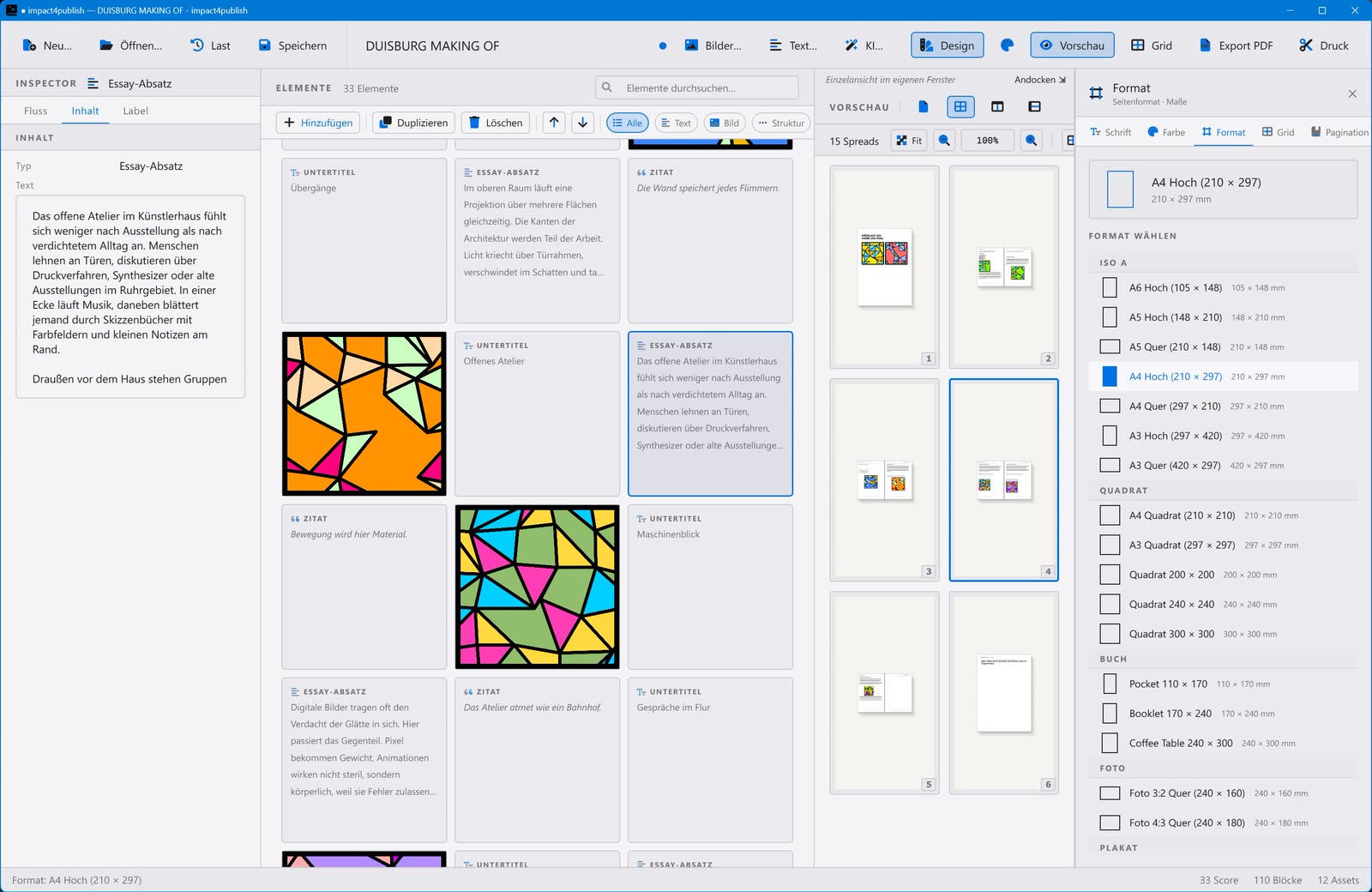
Export goes directly to print-ready PDF with freely definable formats, bleed and exact correspondence to what is shown on screen.
Alongside classic formats such as A4 or A5, square, pocket, booklet or free special formats are possible.
Context
impact4publish is aimed at curatorial, artistic and editorial ways of working in which content is not fitted into templates, but developed out of material, language and image.