IMPACT4GRAMMAR
A grammar of positing
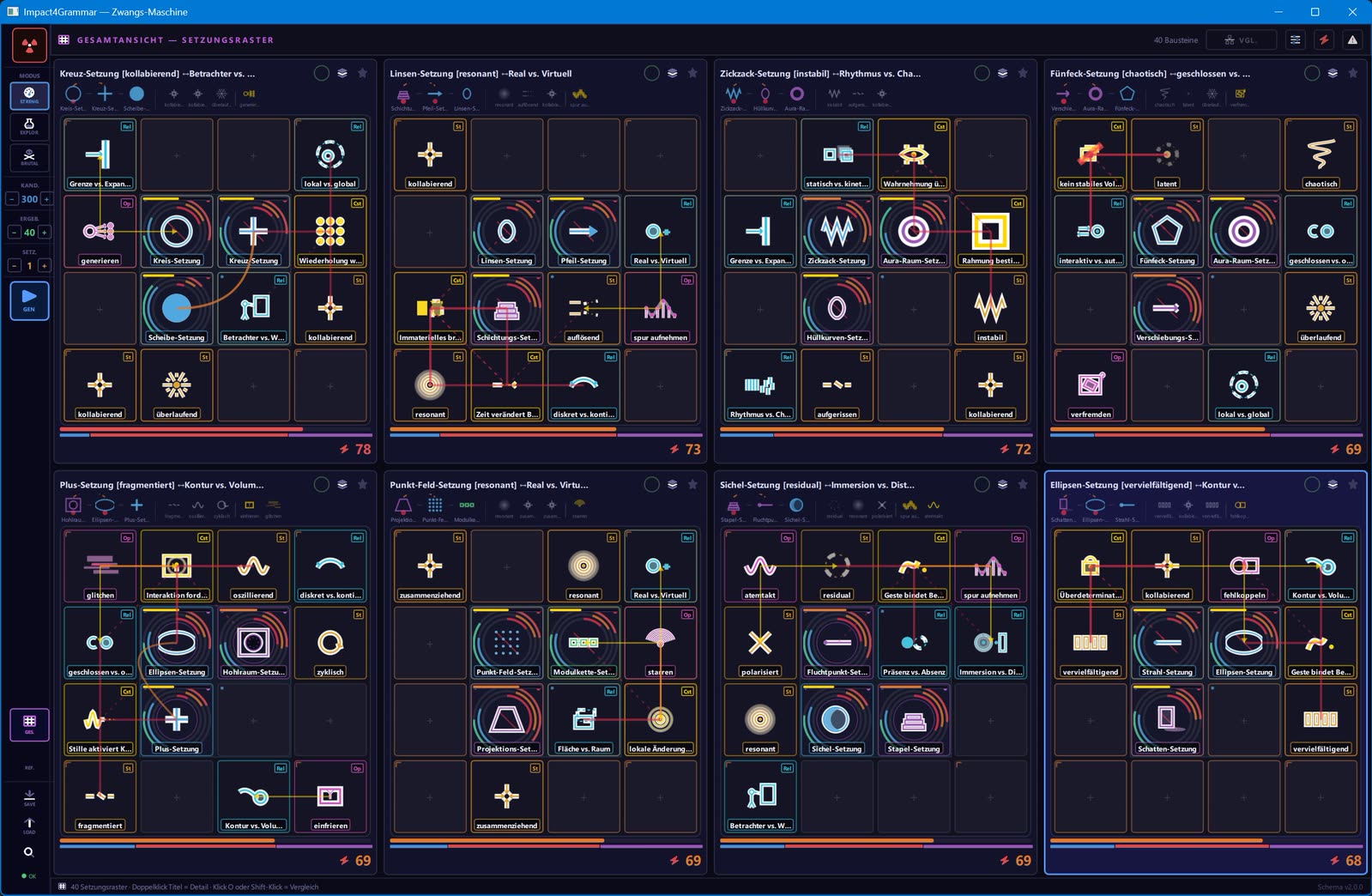
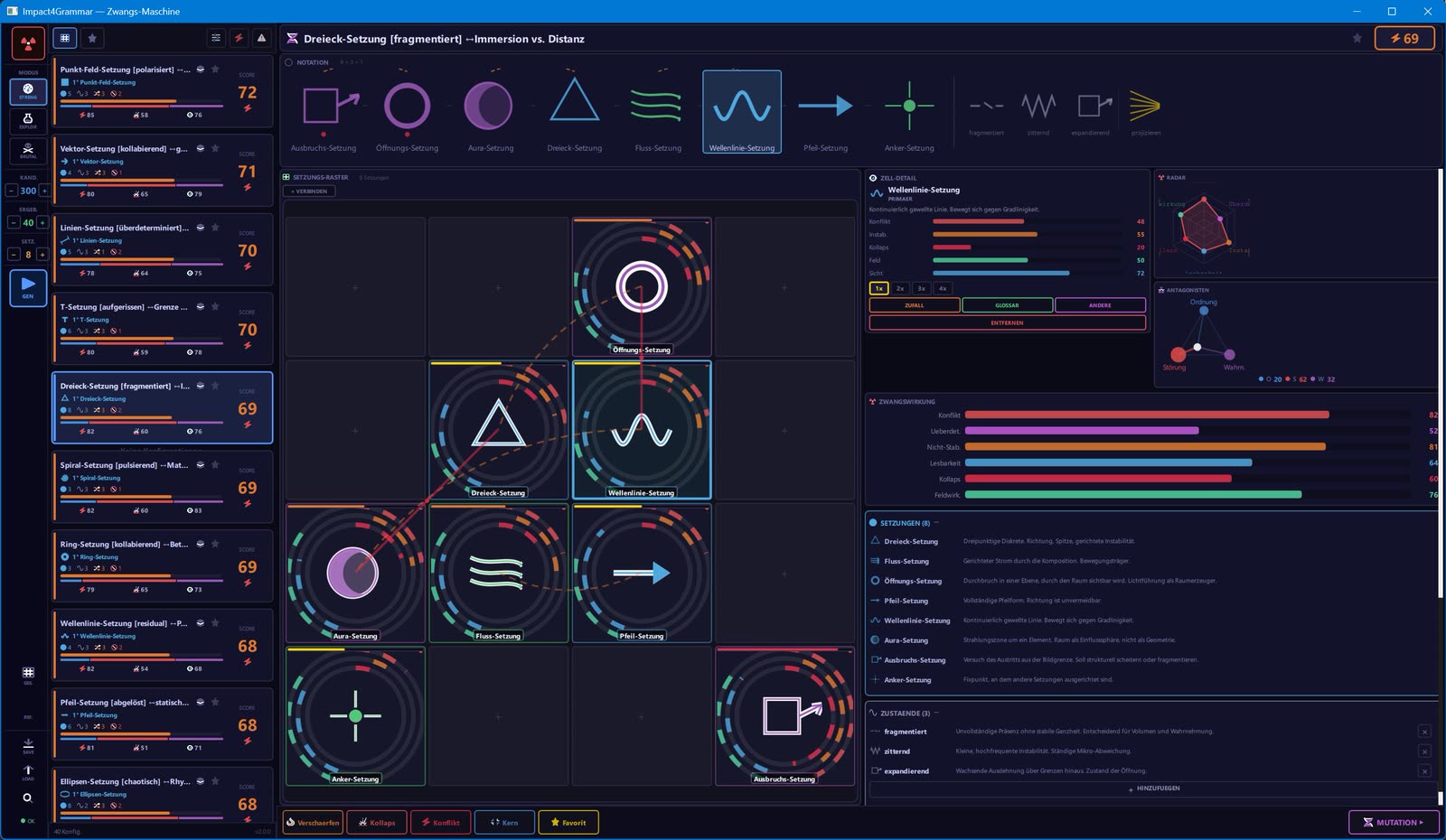
Impact4Grammar is software for investigating and developing visual compositions. It is a toy in the best sense. The background to it is heavyweight. The software does not even really try to stand up to the truthfulness of art. It is itself more of an experiment and a placement of its own.
The idea is a grammar of placements; every searching artist develops a language of their own. This is a radical and nerdy attempt to go into the subject more systematically and more deeply.
At the centre stands not the finished picture, but the smallest decision from which it arises: the placement.
What a placement is A placement is the simplest form of a conscious visual decision. A point, a line or a surface, put in a particular place, in a particular way. It is not a decorative element but an active intervention in the picture. Every placement affects the whole: it draws attention, shifts weight and creates tension. A composition arises not from individual forms, but from the relation of these placements to one another.
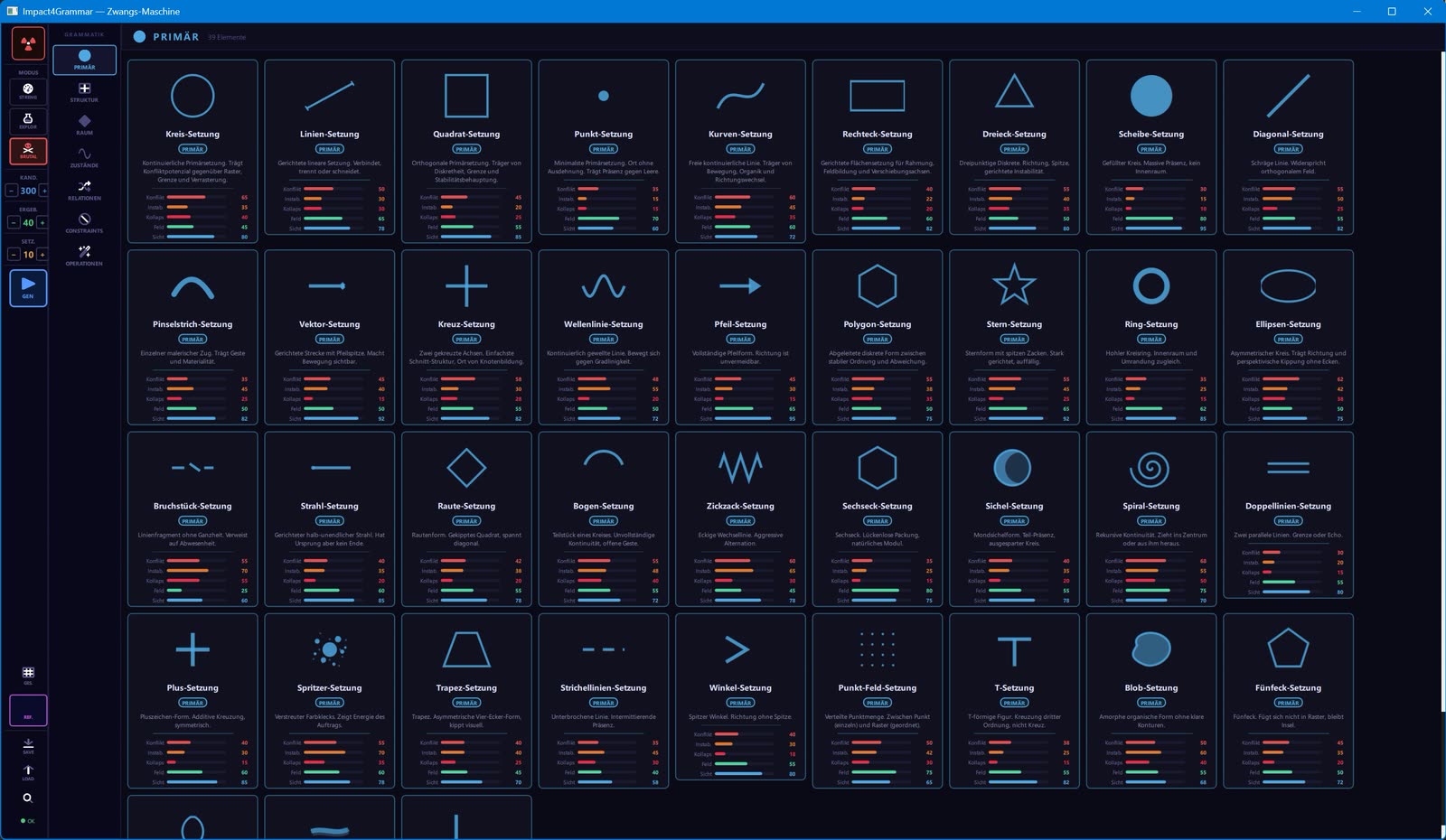
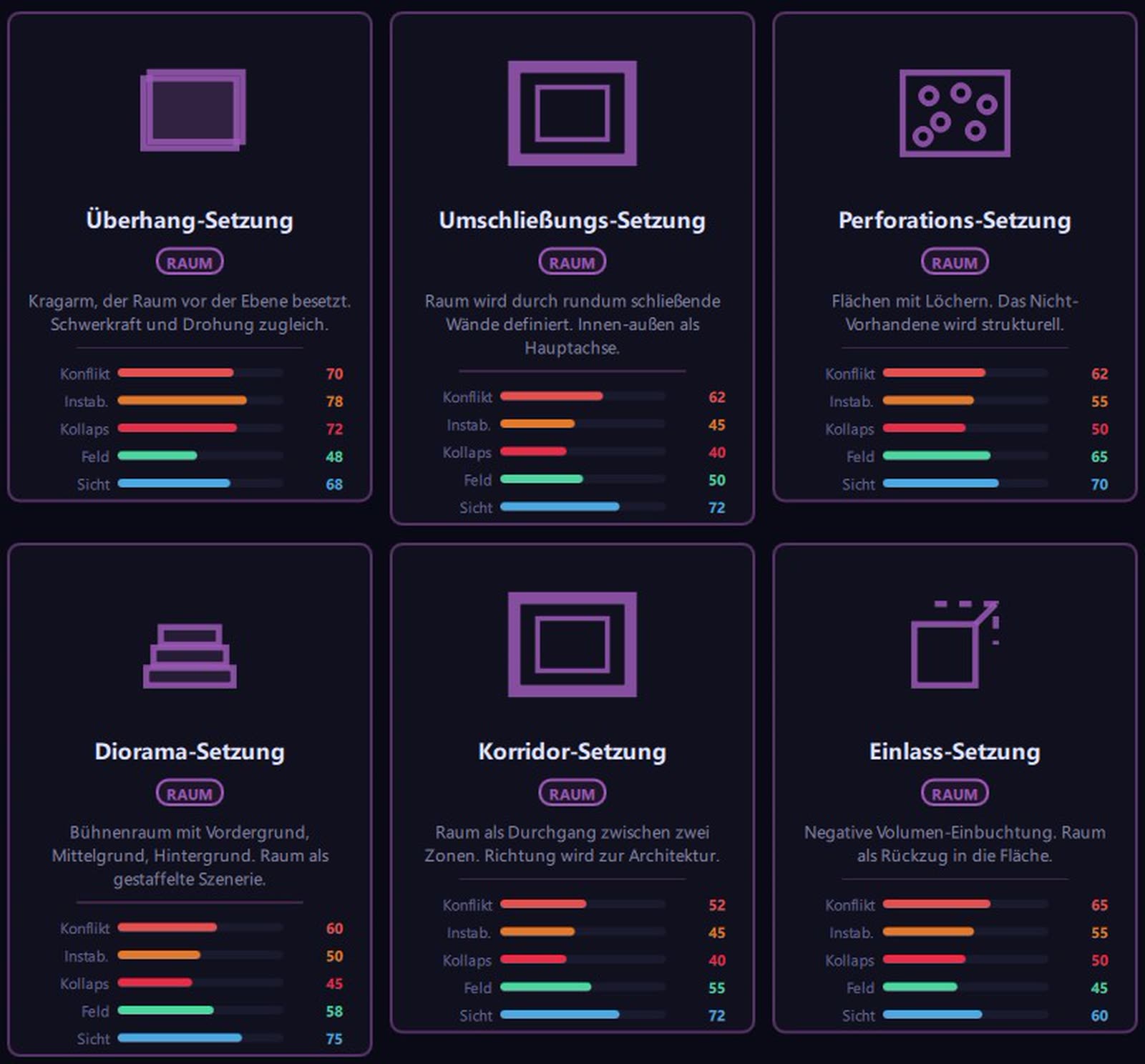
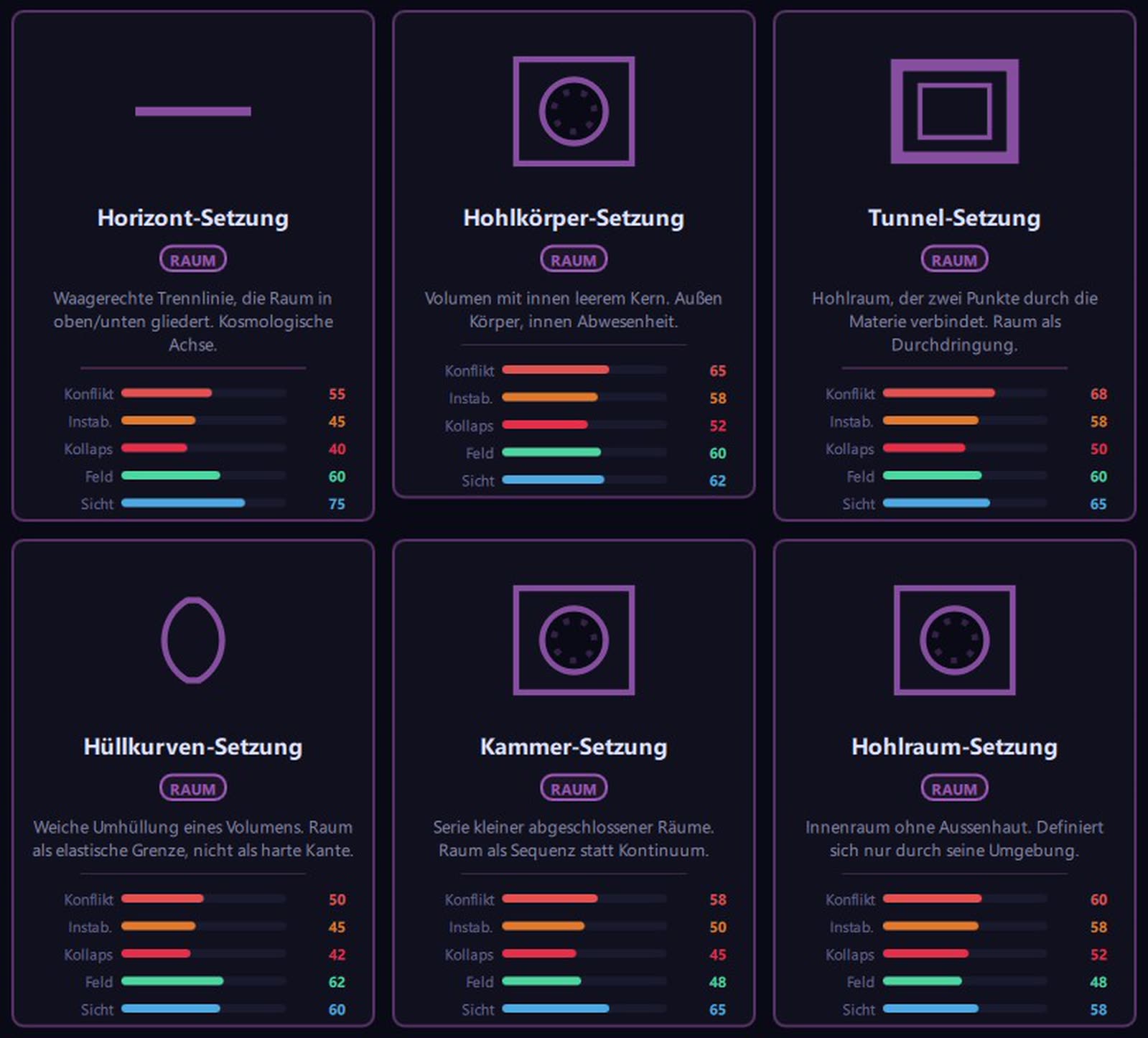
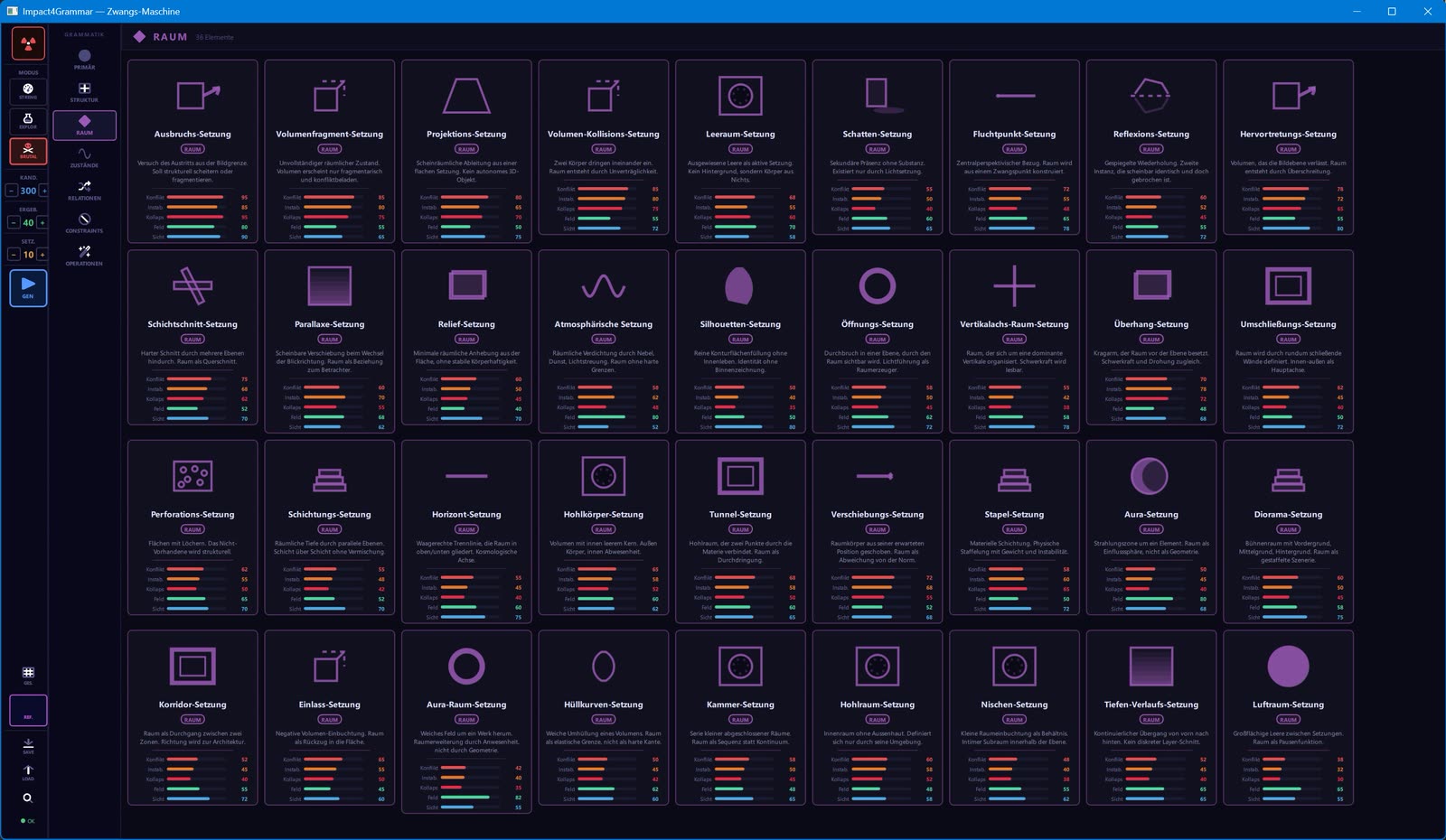
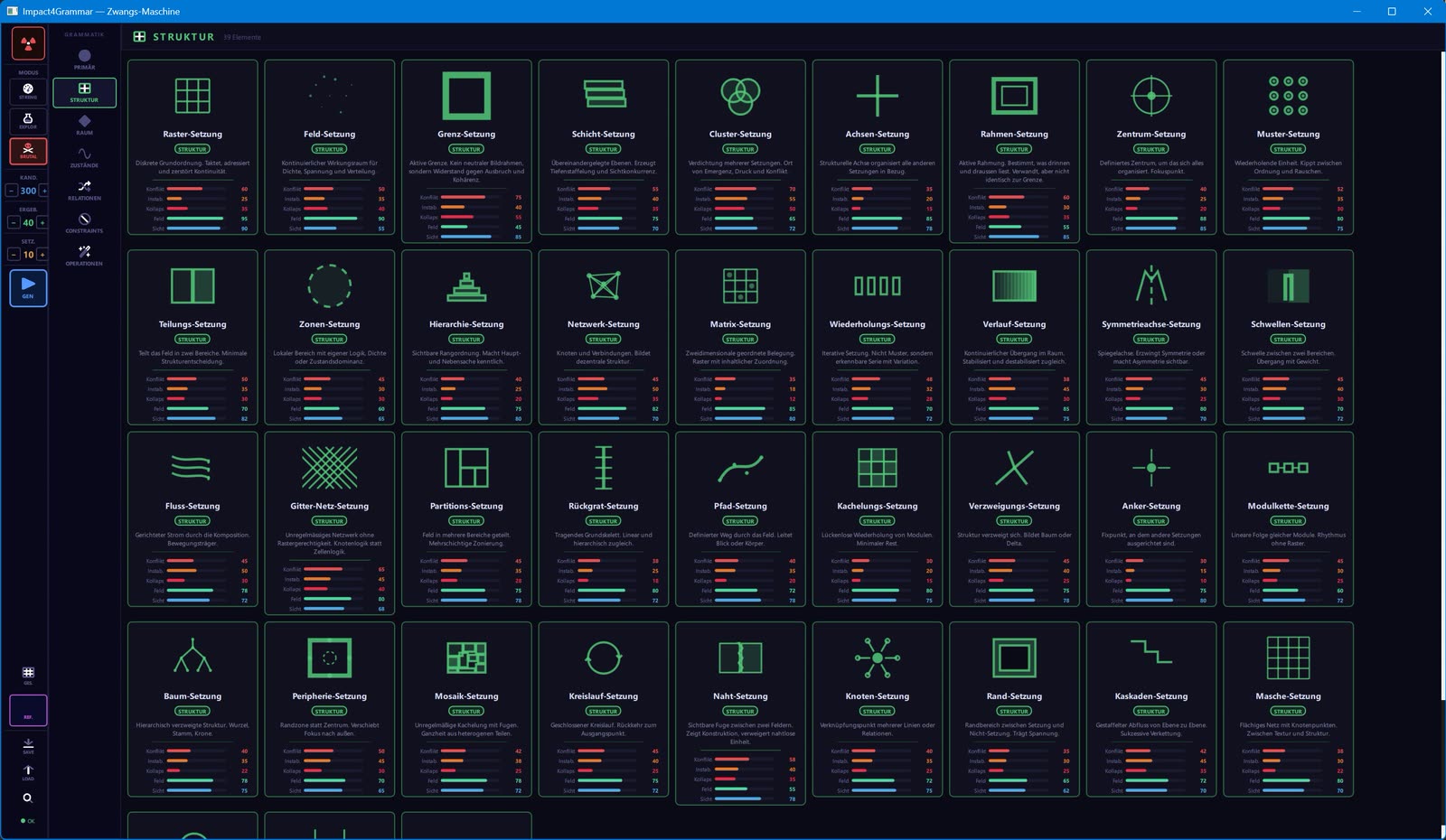
The catalogue of placements Impact4Grammar provides a catalogue of placements, divided into three areas.
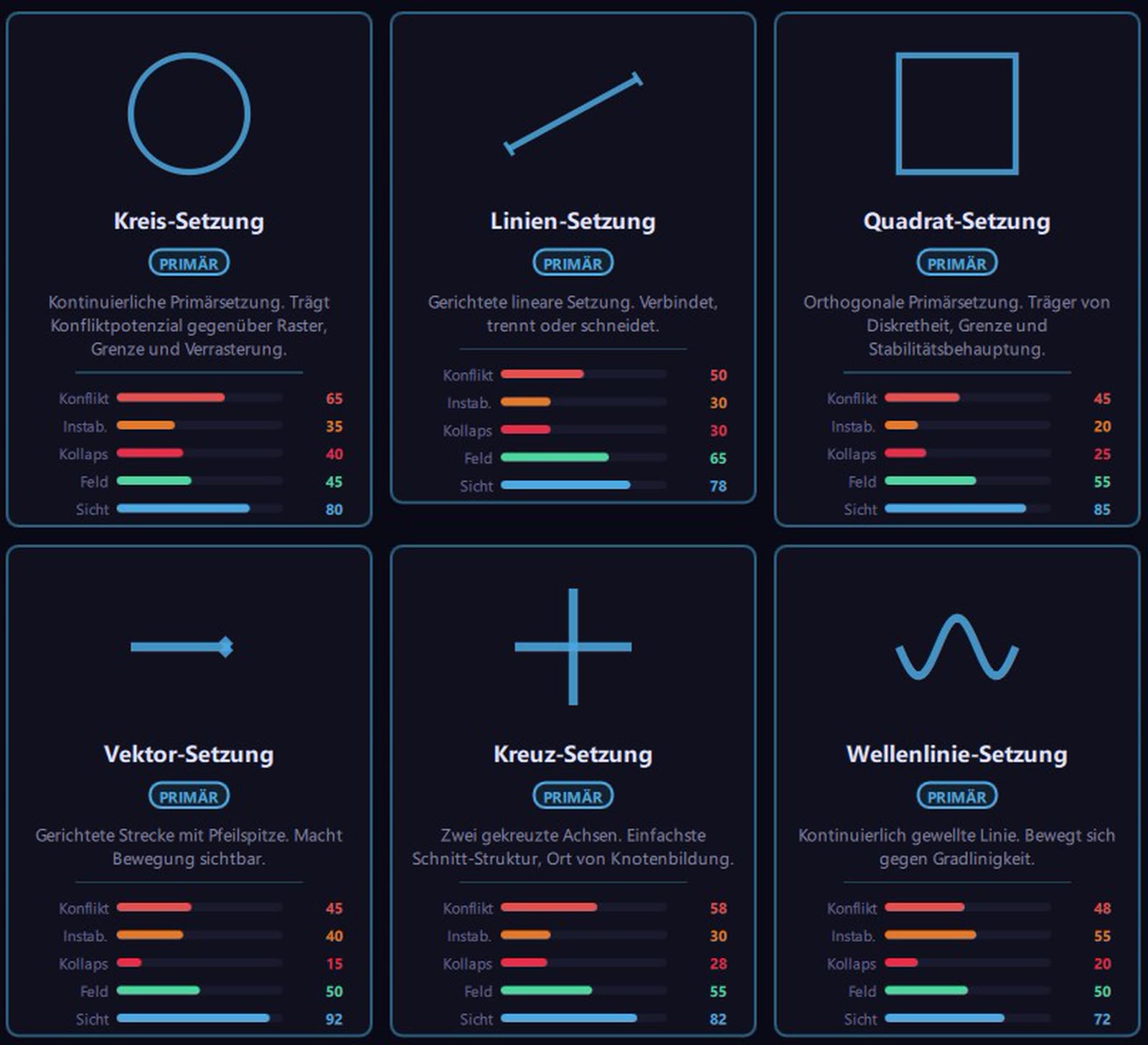
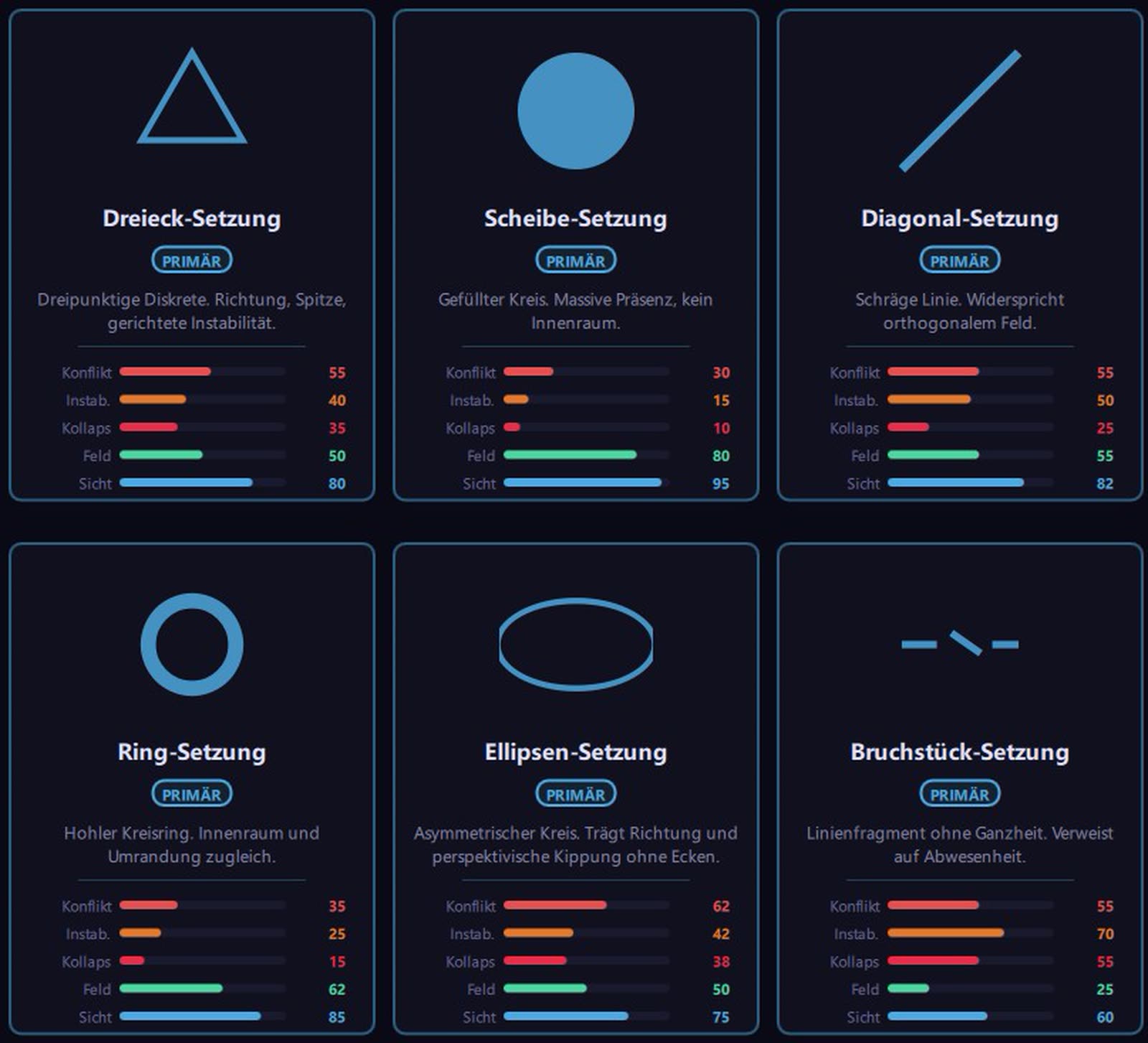
Primary placements Basic forms such as point, line, circle, square, polygon or free shapes. They are the elementary building blocks of any visual work.
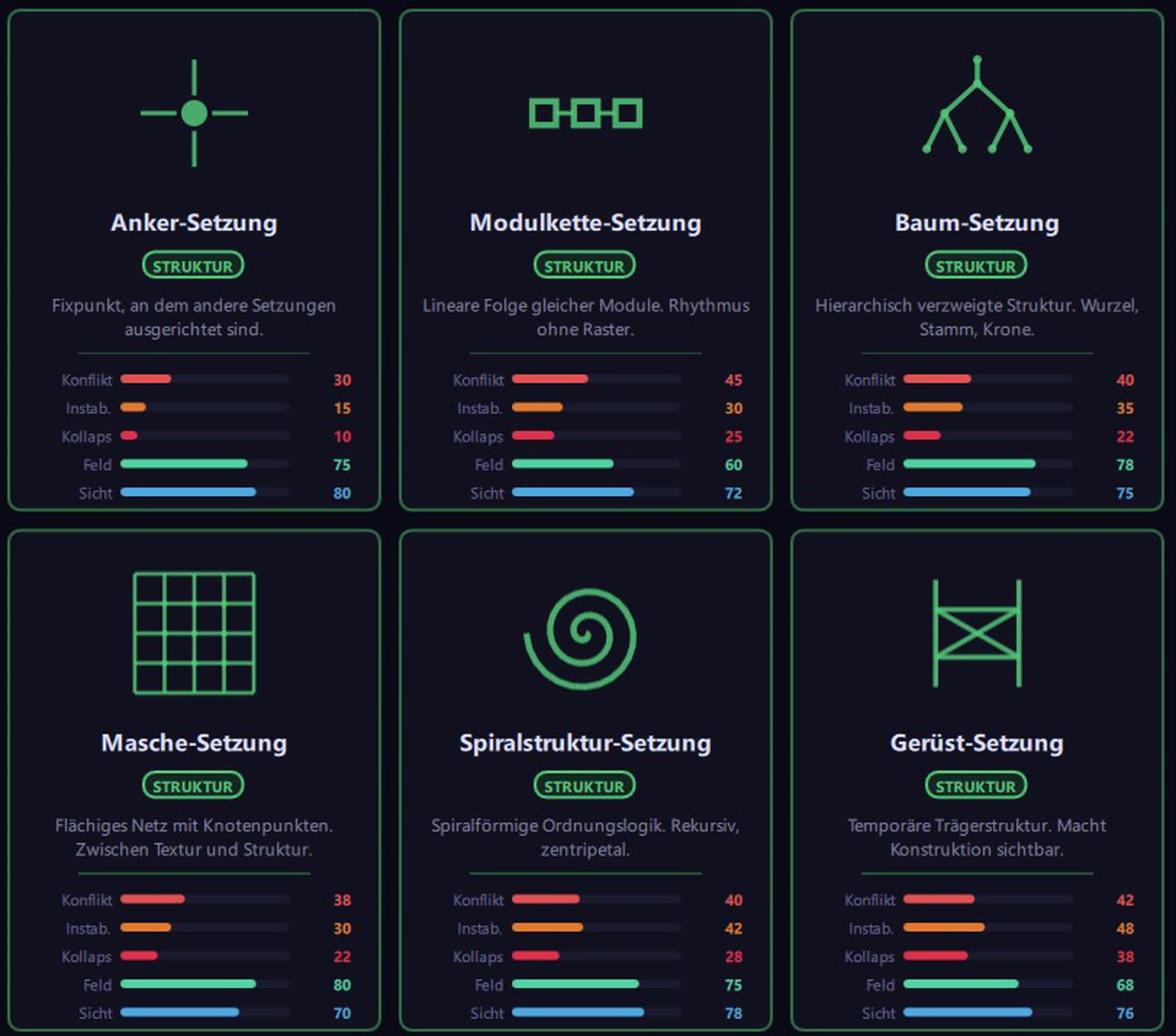
Structural placements Ordering elements such as grids, fields, boundaries, axes or networks. They determine how individual forms work together.
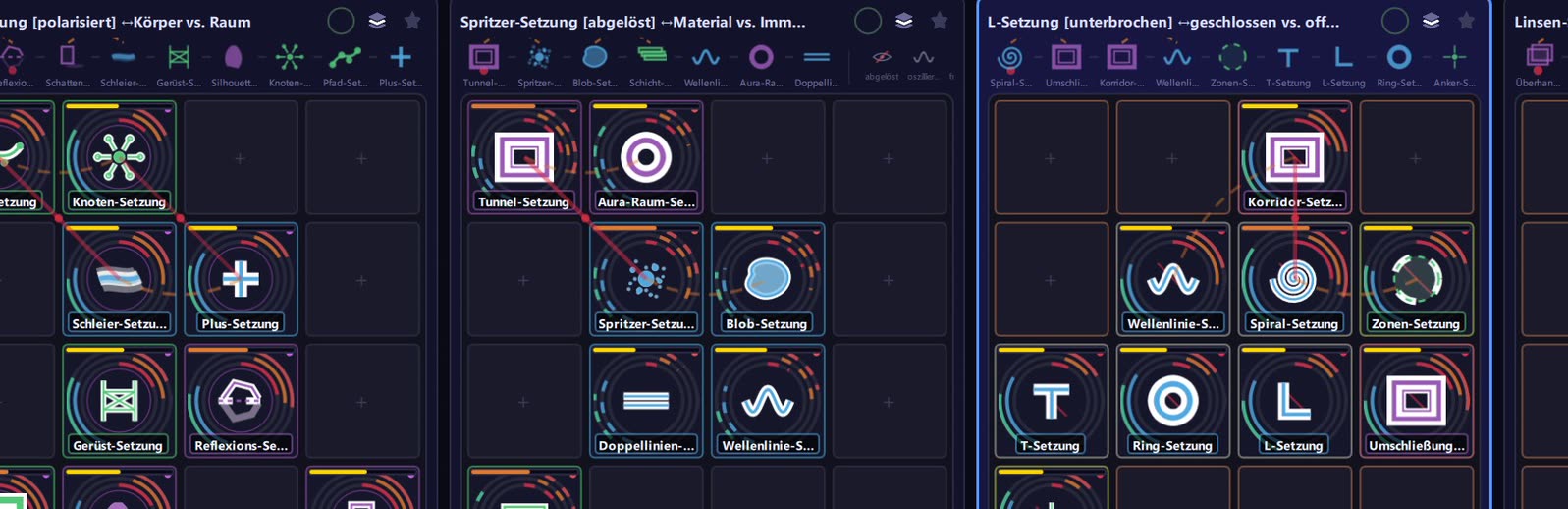
Spatial placements Elements that create depth and spatial effect, such as layering, overlap or perspective. They extend the composition beyond the plane.
Central forces in a composition Every work moves between three fundamental influences.
Order - structure, repetition and clarity Disruption - break, contrast and deviation Perception - visibility, legibility and attention
The software makes visible how a composition behaves within this field of tension.
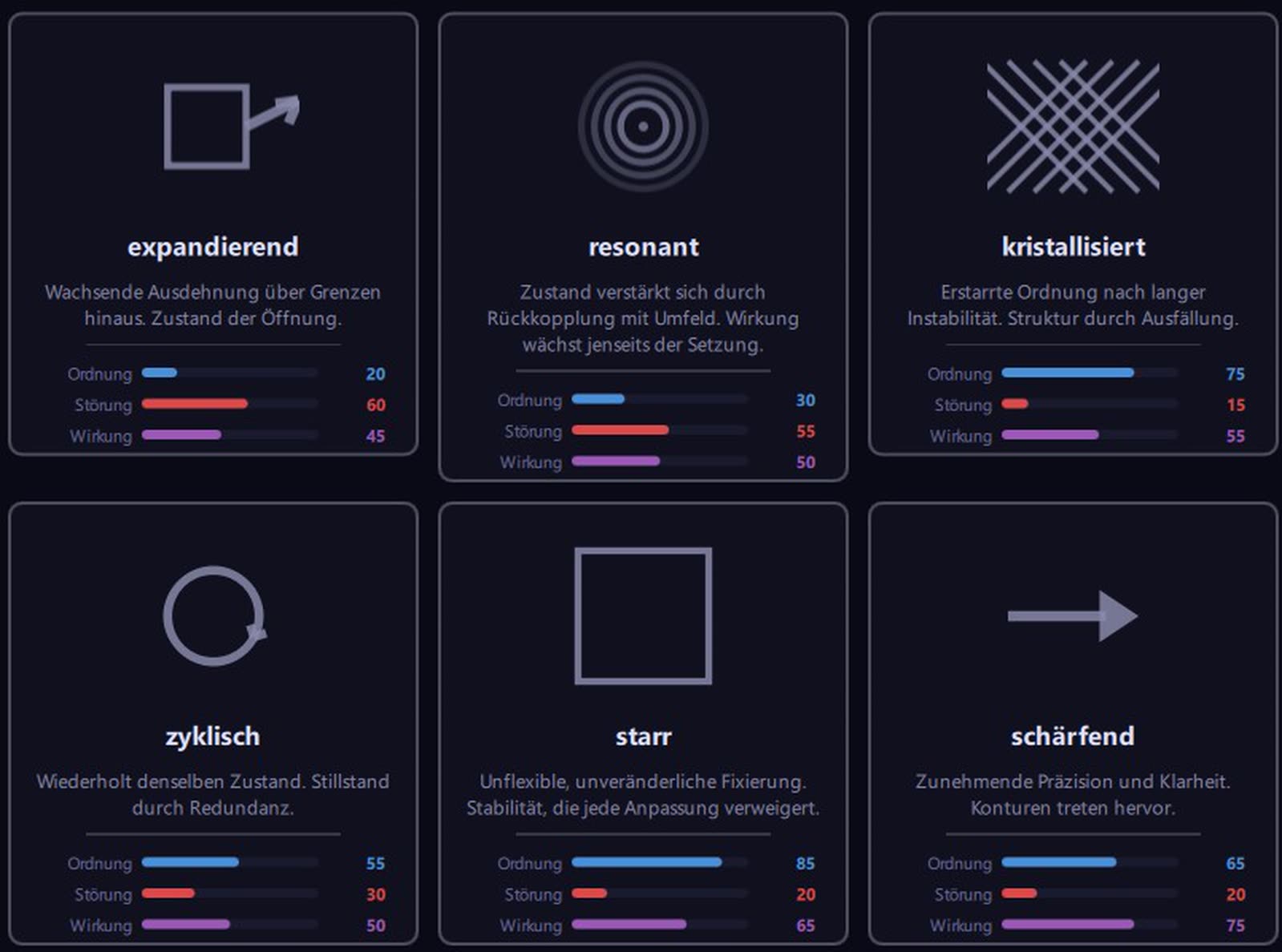
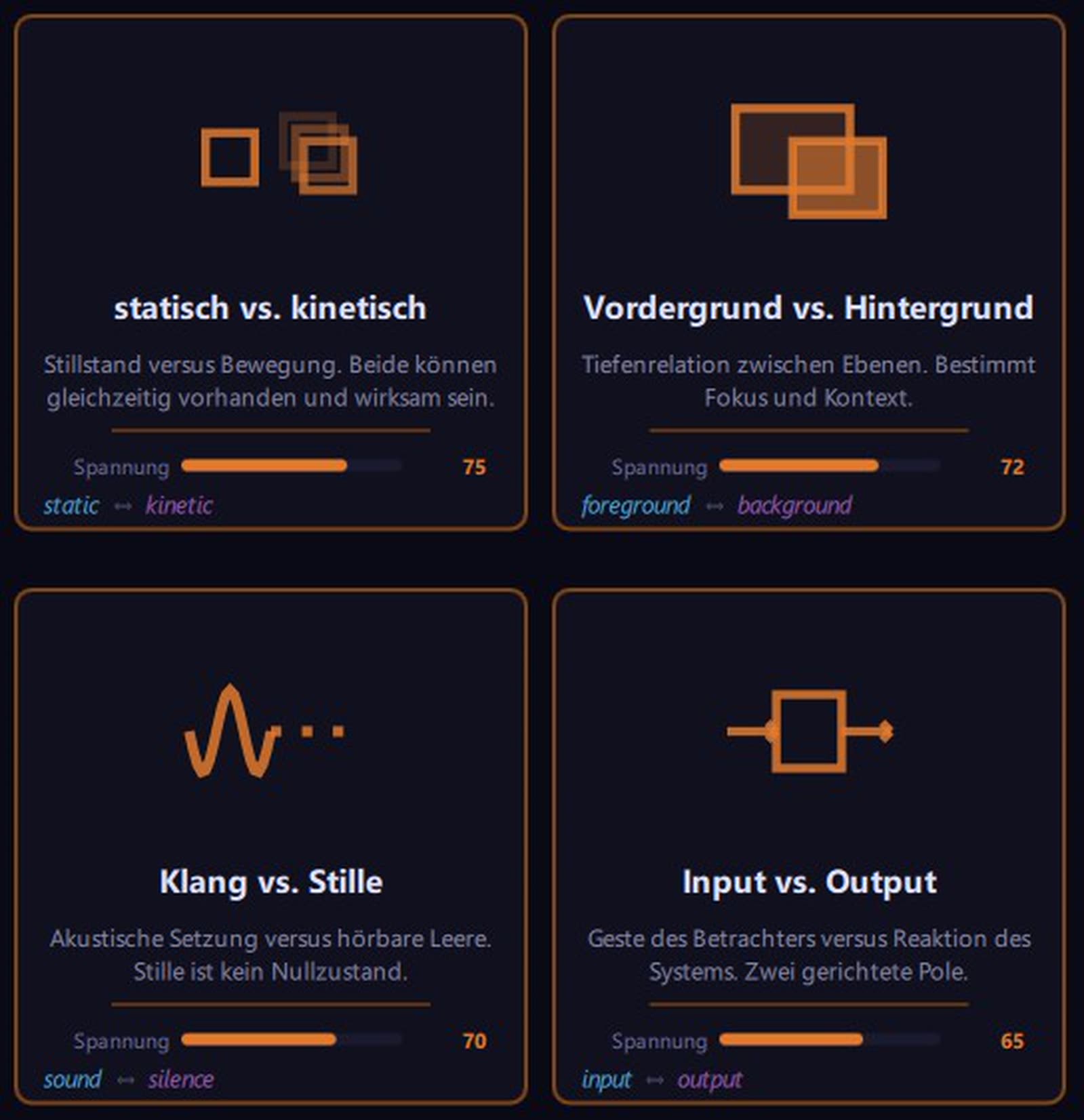
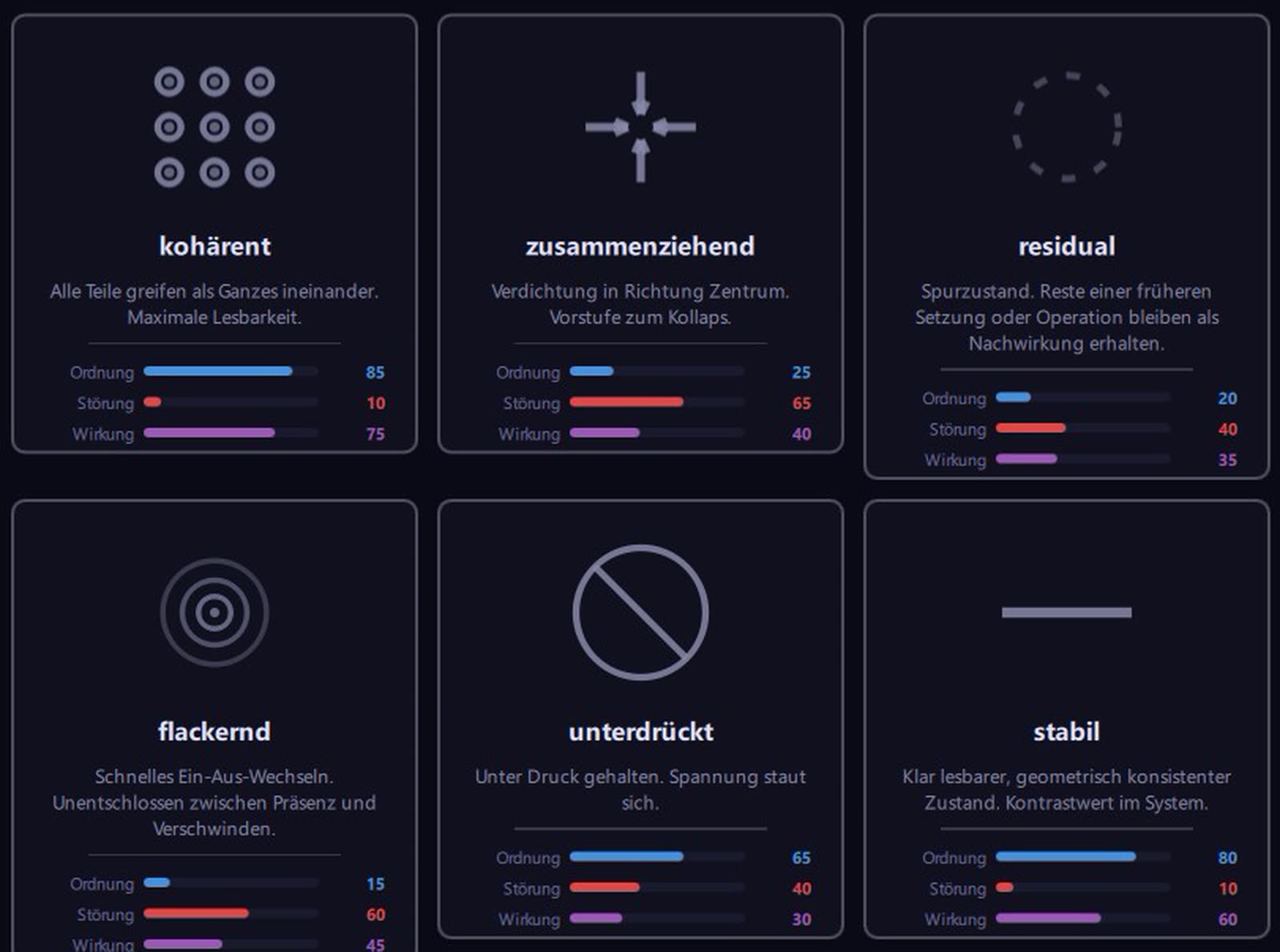
States and relations Placements are not static. They can appear stable, fragmented, dynamic or unstable. At the same time they always stand in relation to one another. Important tensions arise, for example, between:
open and closed calm and moving simple and complex
Surface and space The quality of a composition arises from these relations, not from individual elements.
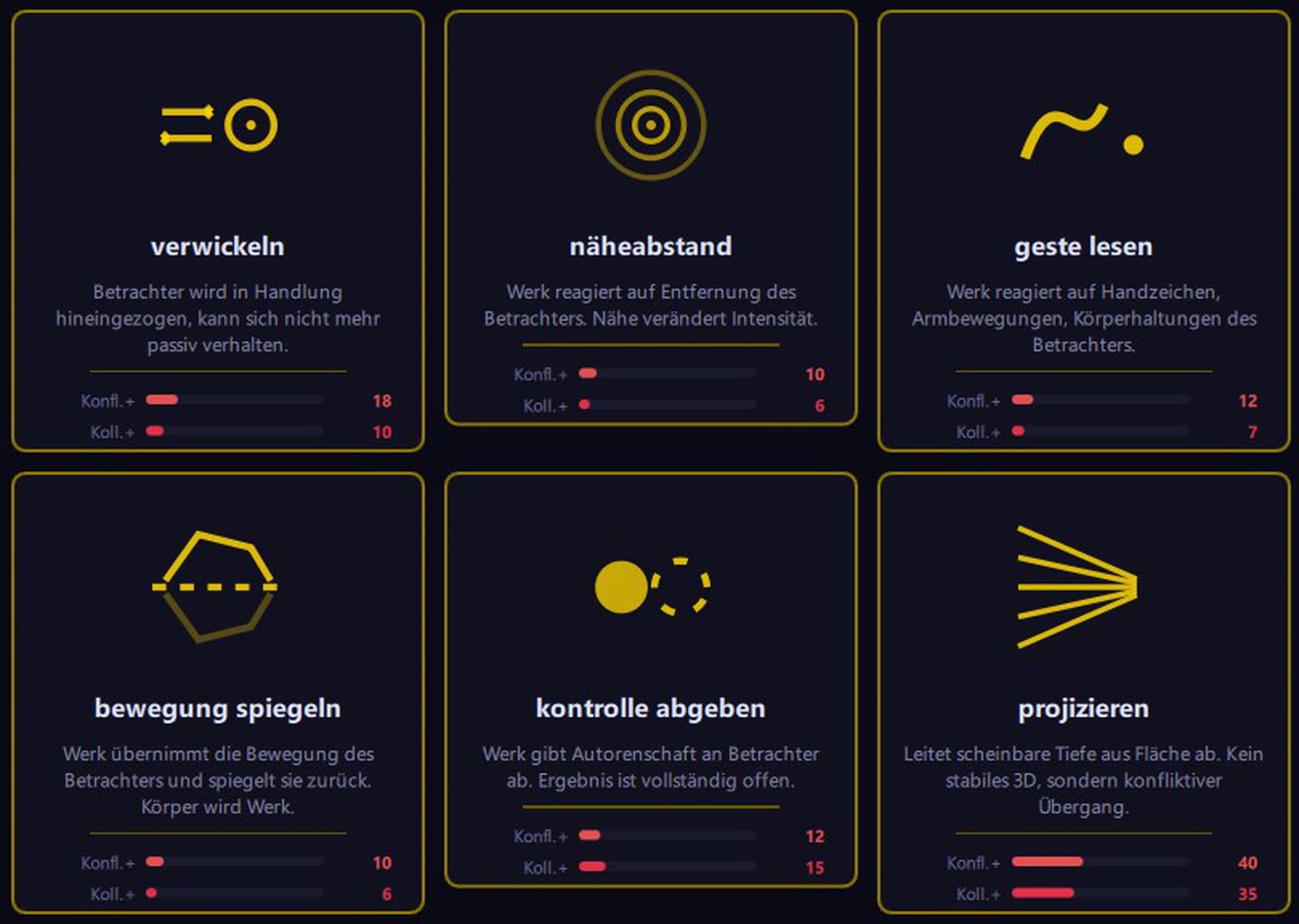
Compelling effect Compelling effect describes the force with which a placement directs perception, fixes it or makes it hard to avoid. This is not about real compulsion, but about a visual necessity: a form, a contrast or a position is placed in such a way that the viewer responds almost automatically.
Examples:
A single point in empty space draws the eye at once. A strong contrast forces a distinction. A dominant axis fixes the orientation.
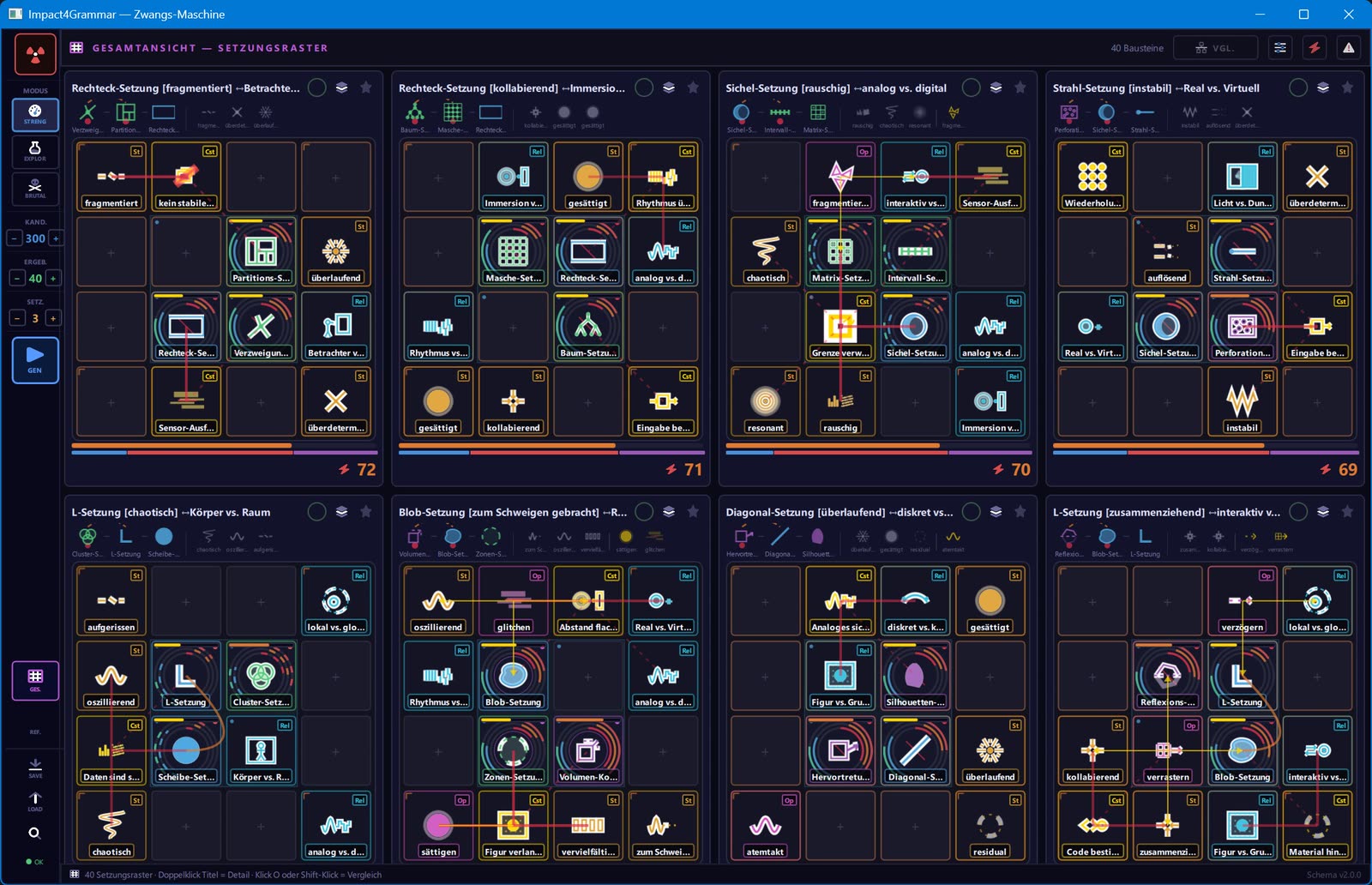
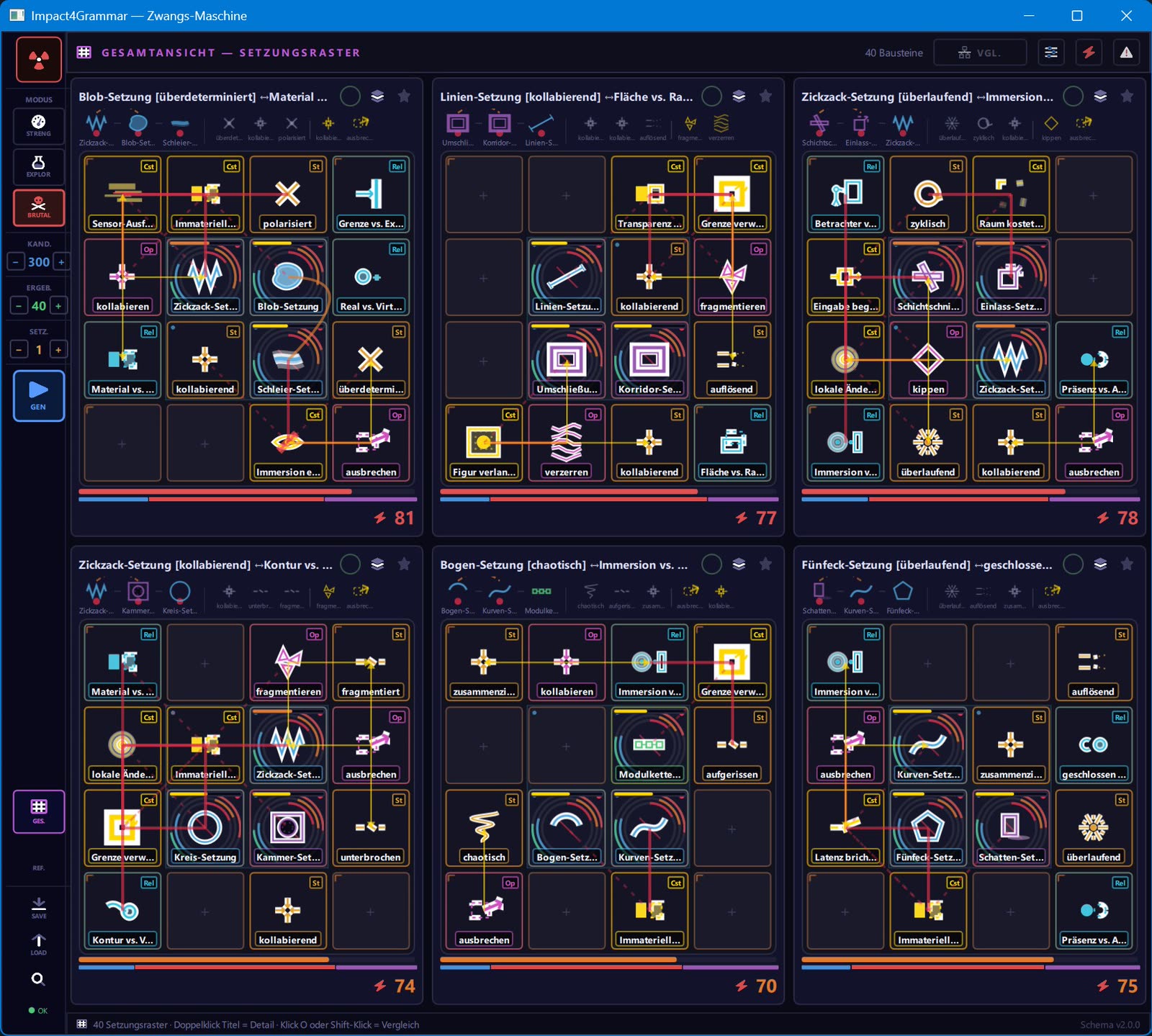
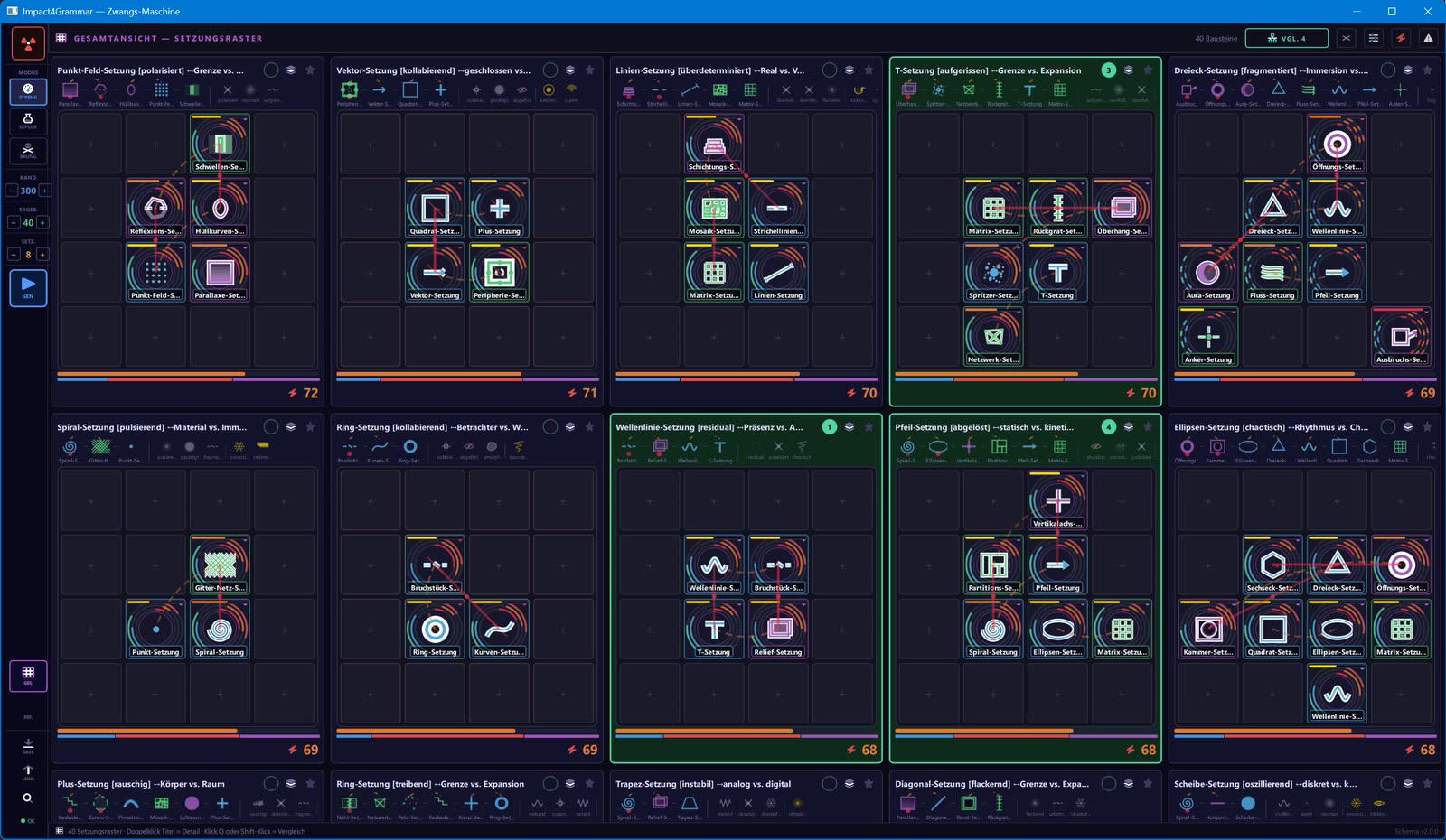
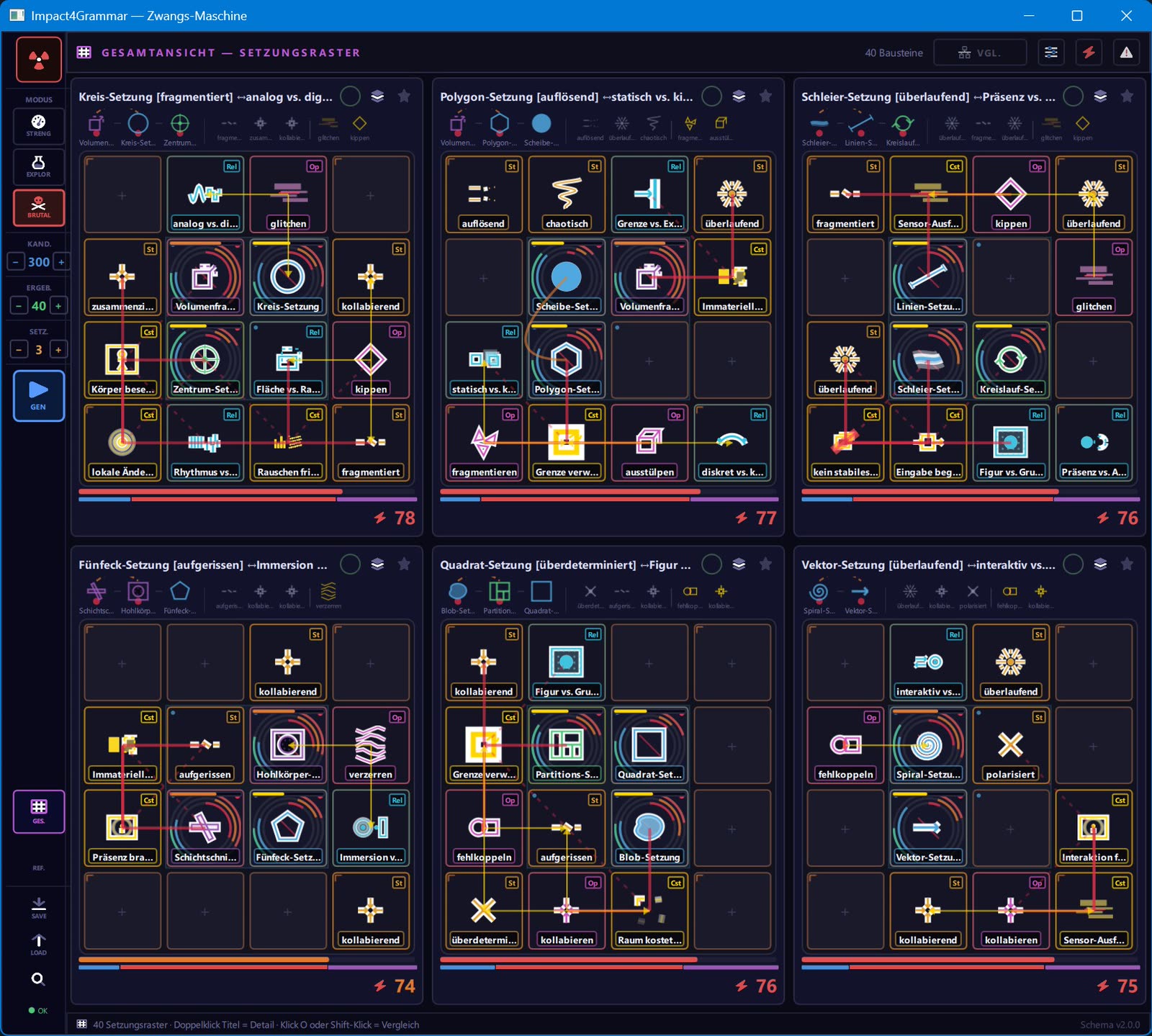
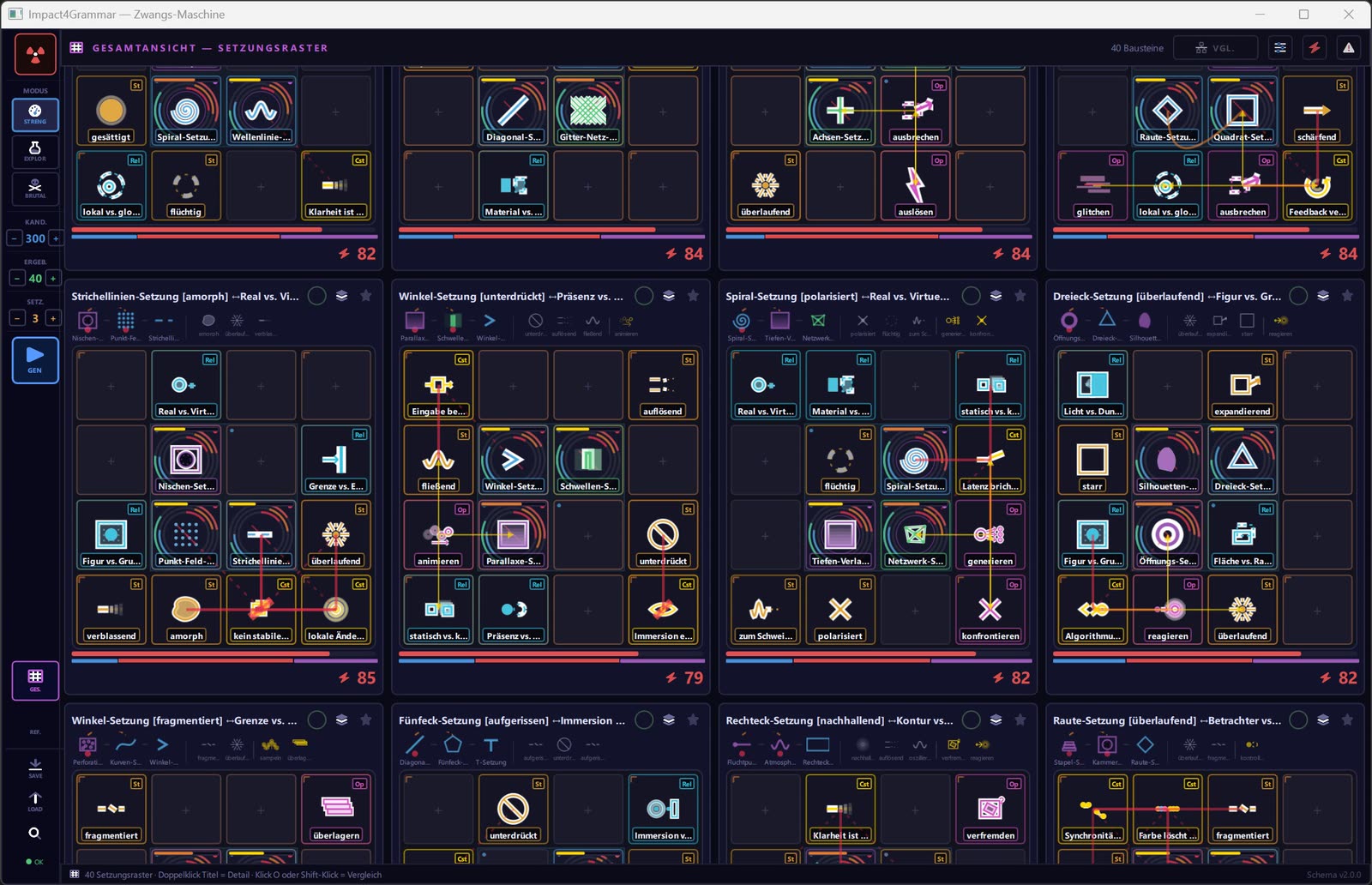
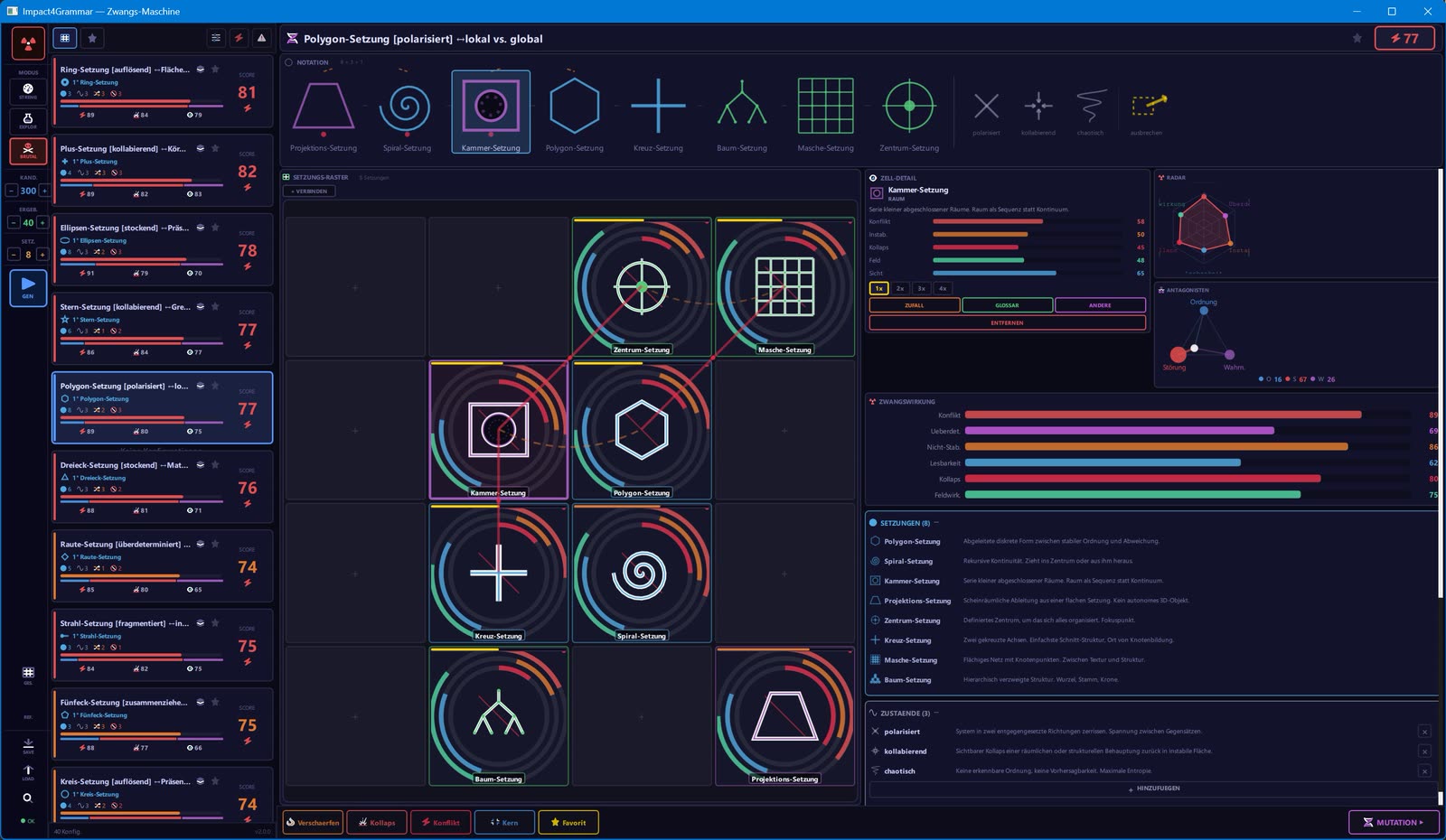
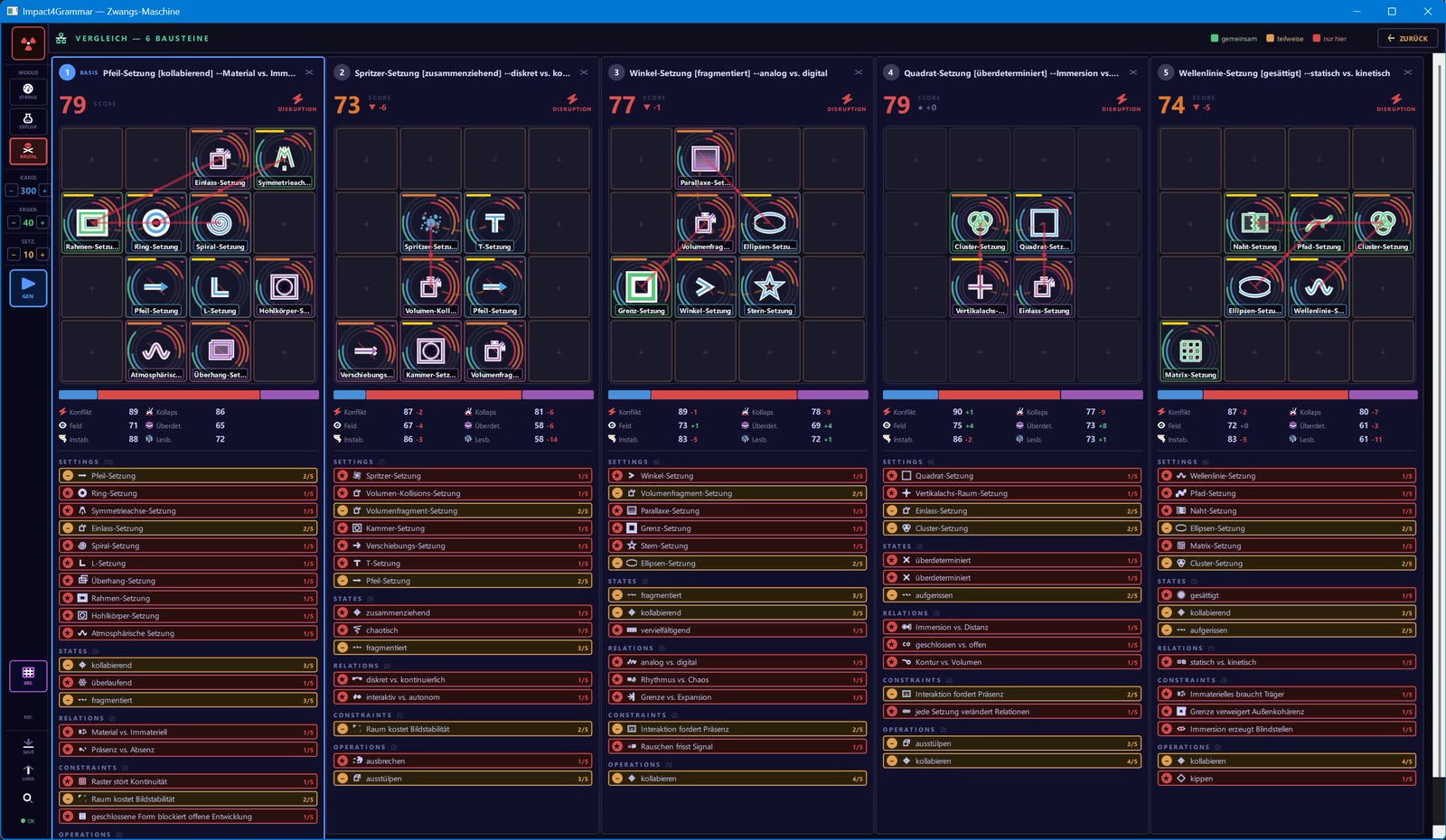
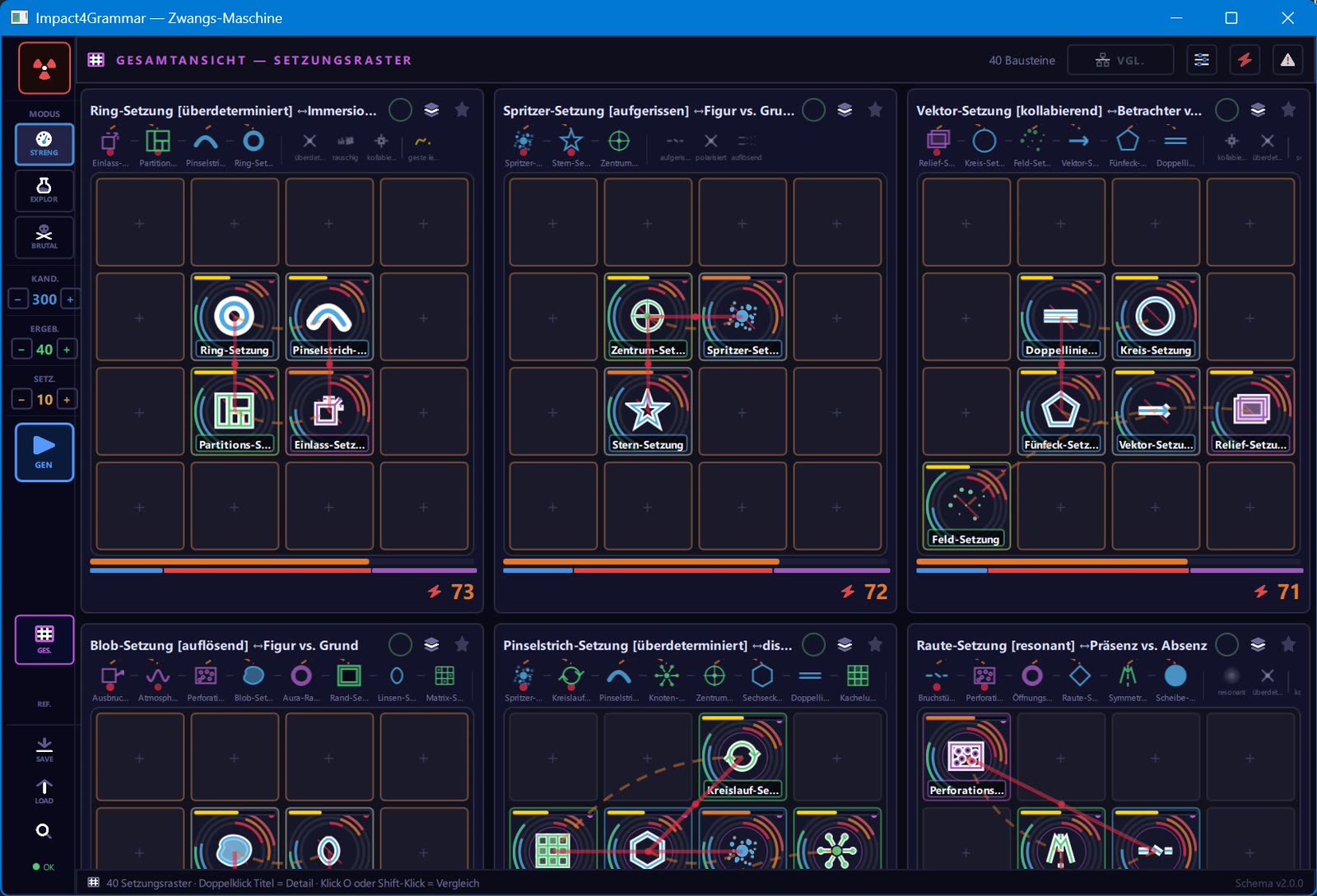
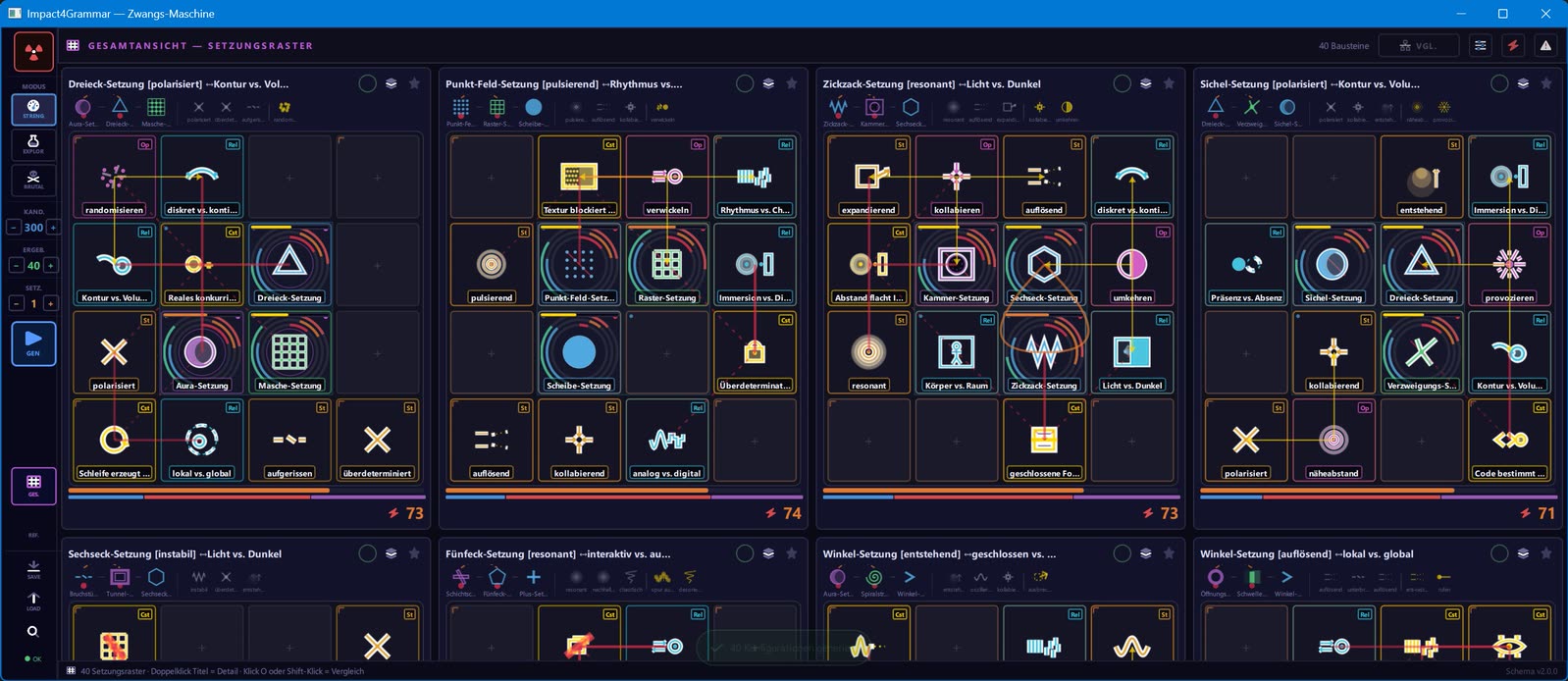
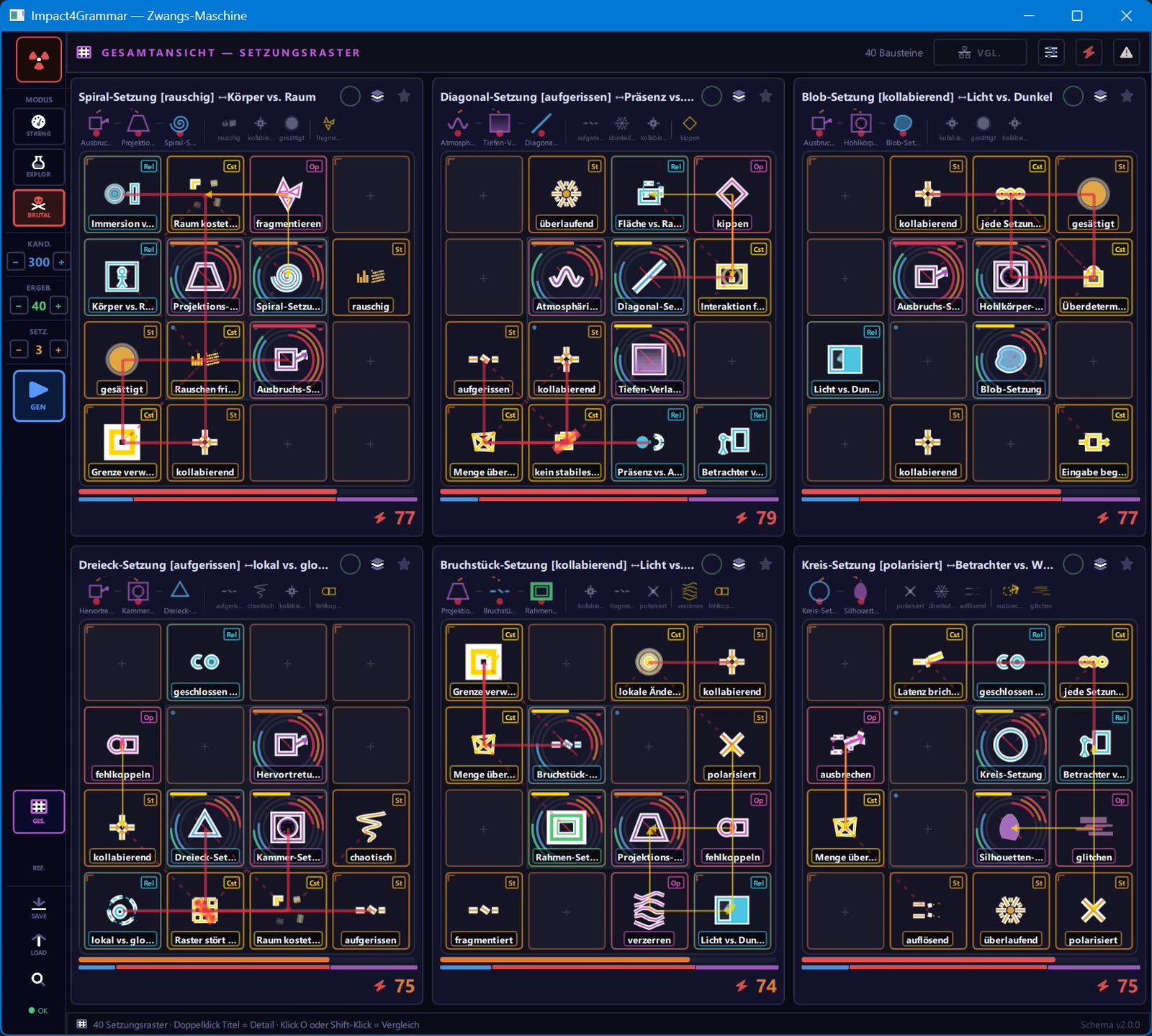
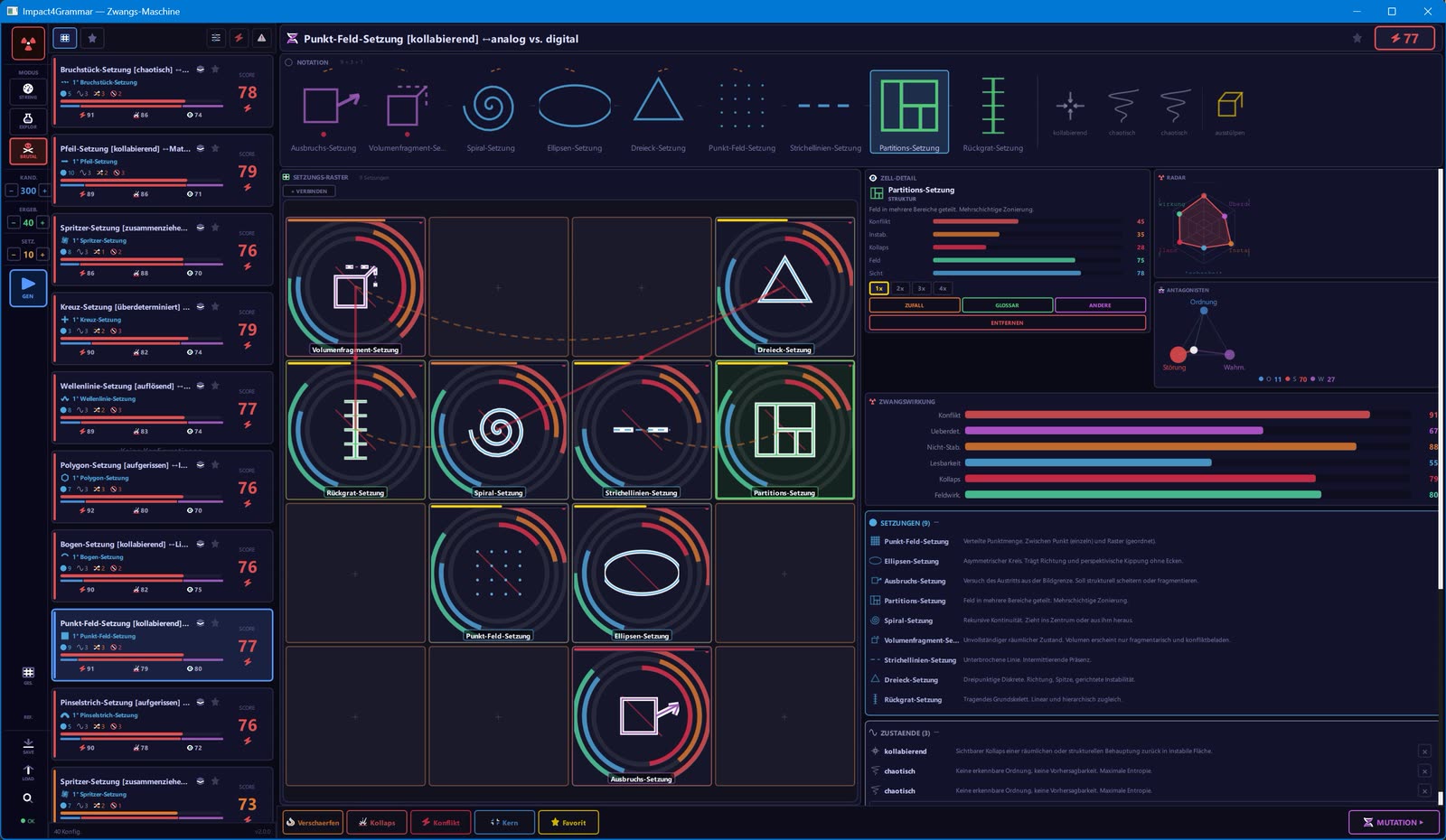
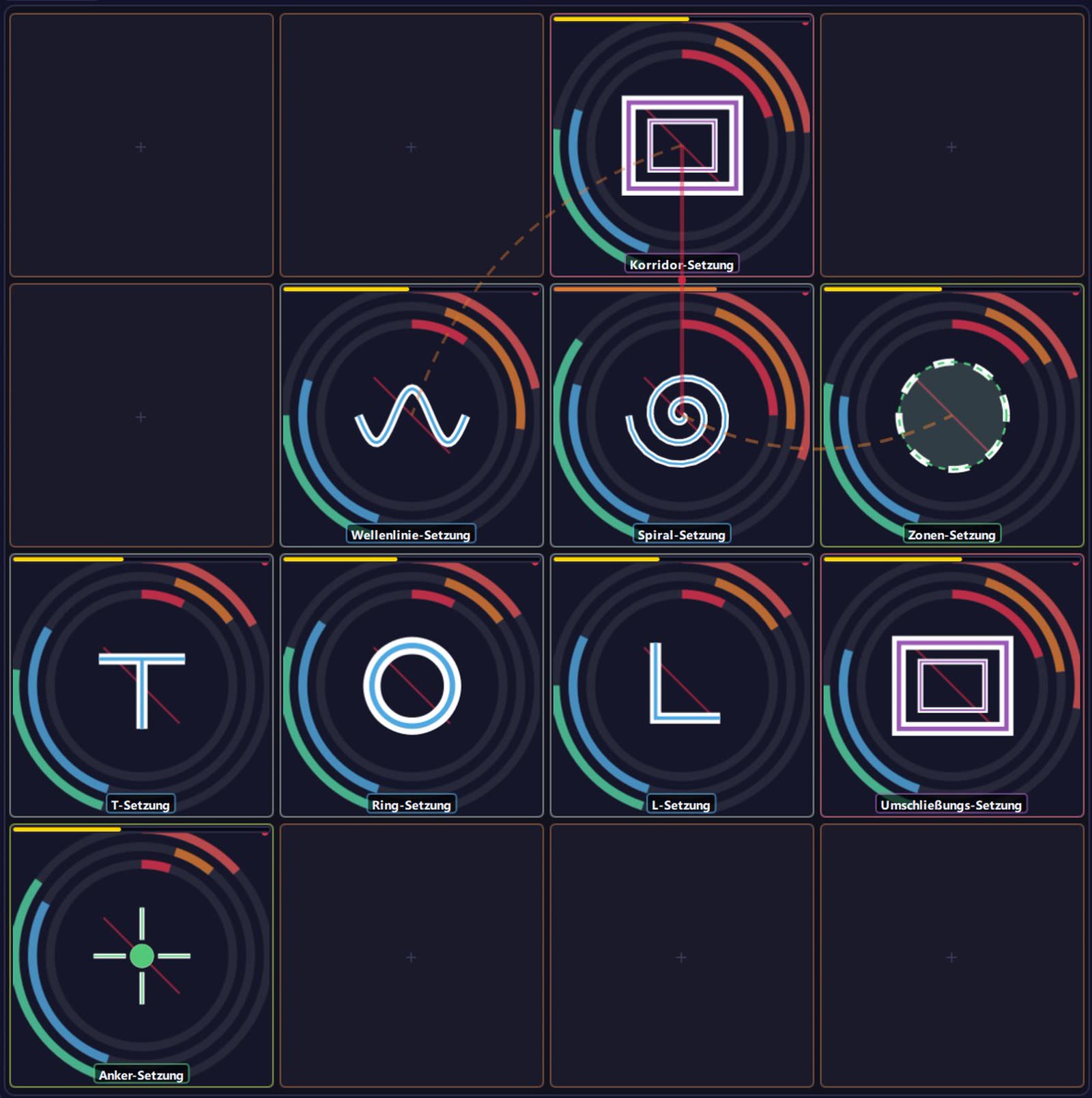
Compelling effect therefore arises where a placement is not merely present, but actively determines perception and leaves little room. Working with Impact4Grammar The software generates and organises placements in a 4×4 grid. Compositions can be changed, duplicated and compared with one another.
Three modes are available.
Strict - follows clear rules Exploration - widens the space of possibilities Brutality - emphasises contrasts and strong tensions
The aim is not a correct solution, but a conscious handling of decisions.
Measures for orientation Every composition is described by several measures.
Conflict strength Complexity Stability Field effect Legibility
These values serve as orientation and comparison, not as objective evaluation.
Aim Impact4Grammar helps to recognise visual decisions more clearly and to make them more deliberately. The software does not replace creative work; it supports understanding it more consciously, playing with it and developing it further.
Images …
62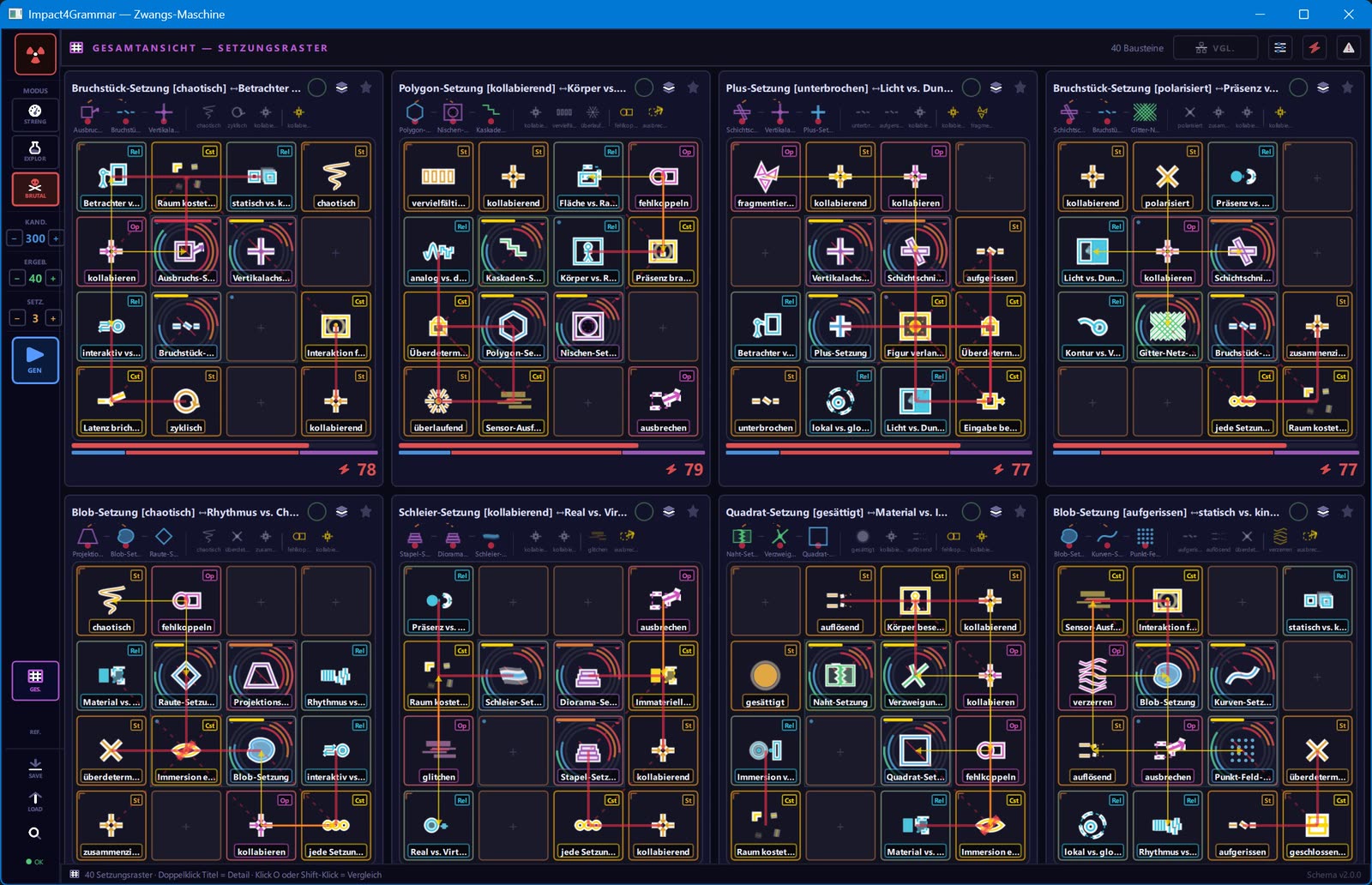









26 autres dans les archives