IMPACT4IMMERSIVE RUNTIME
Immersive art installations
The IMPACT4IMMERSIVE runtime is the execution environment for immersive installations. It runs projects in fullscreen mode and uses all connected displays on a machine. Setups with several graphics cards are supported - for example for rooms with five projectors, or for multi-channel arrangements in which image surfaces and sight lines are treated not as "one screen" but as a spatially distributed system.
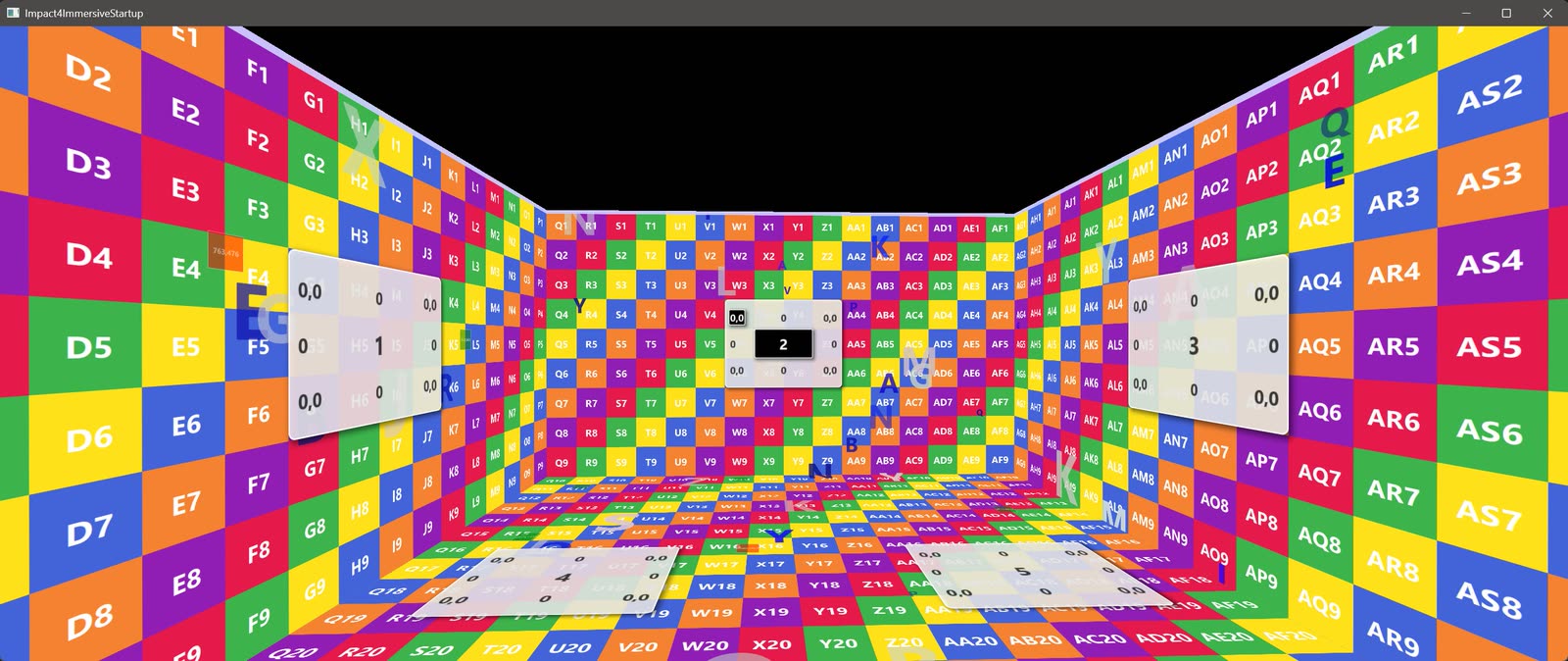
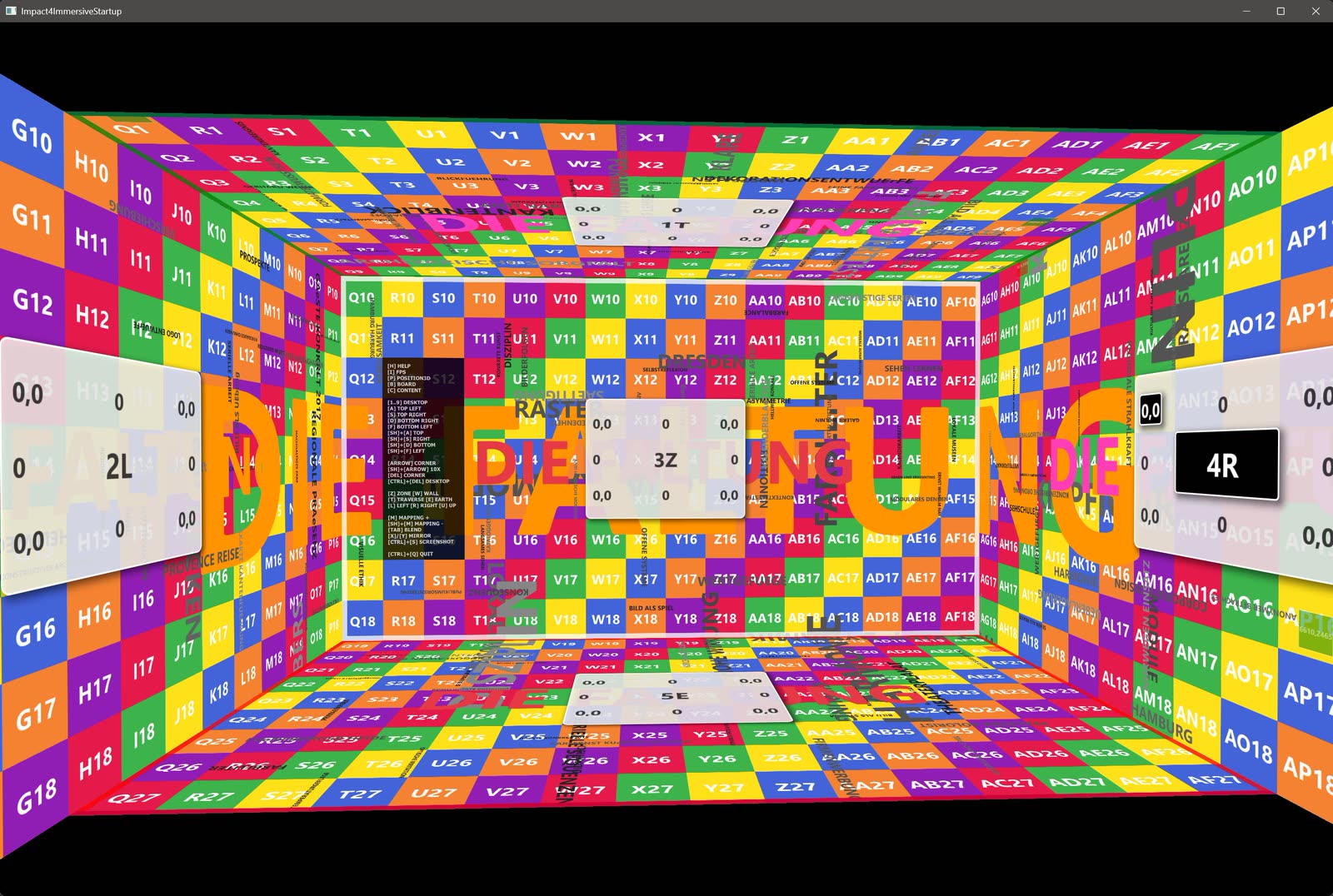
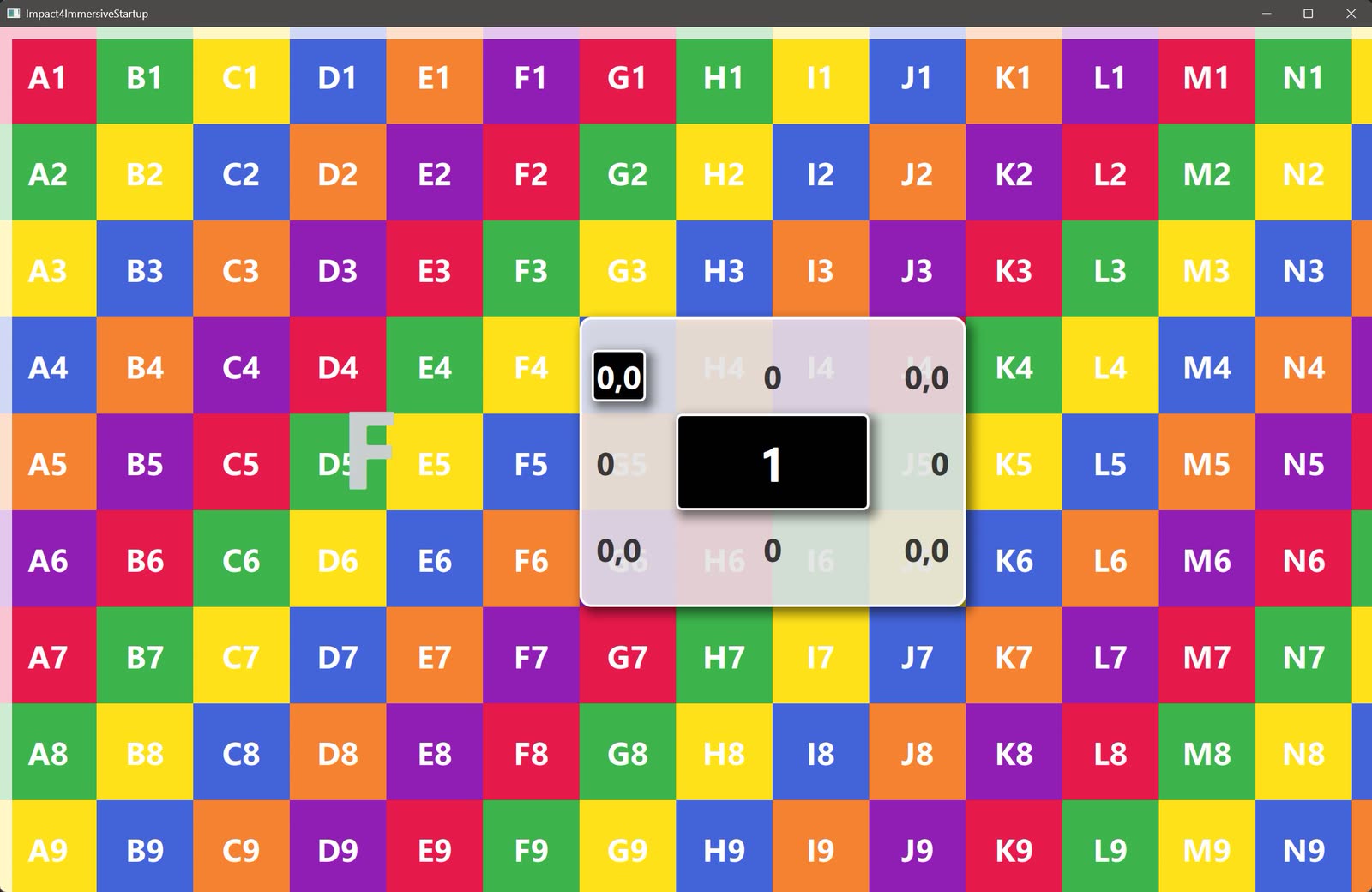
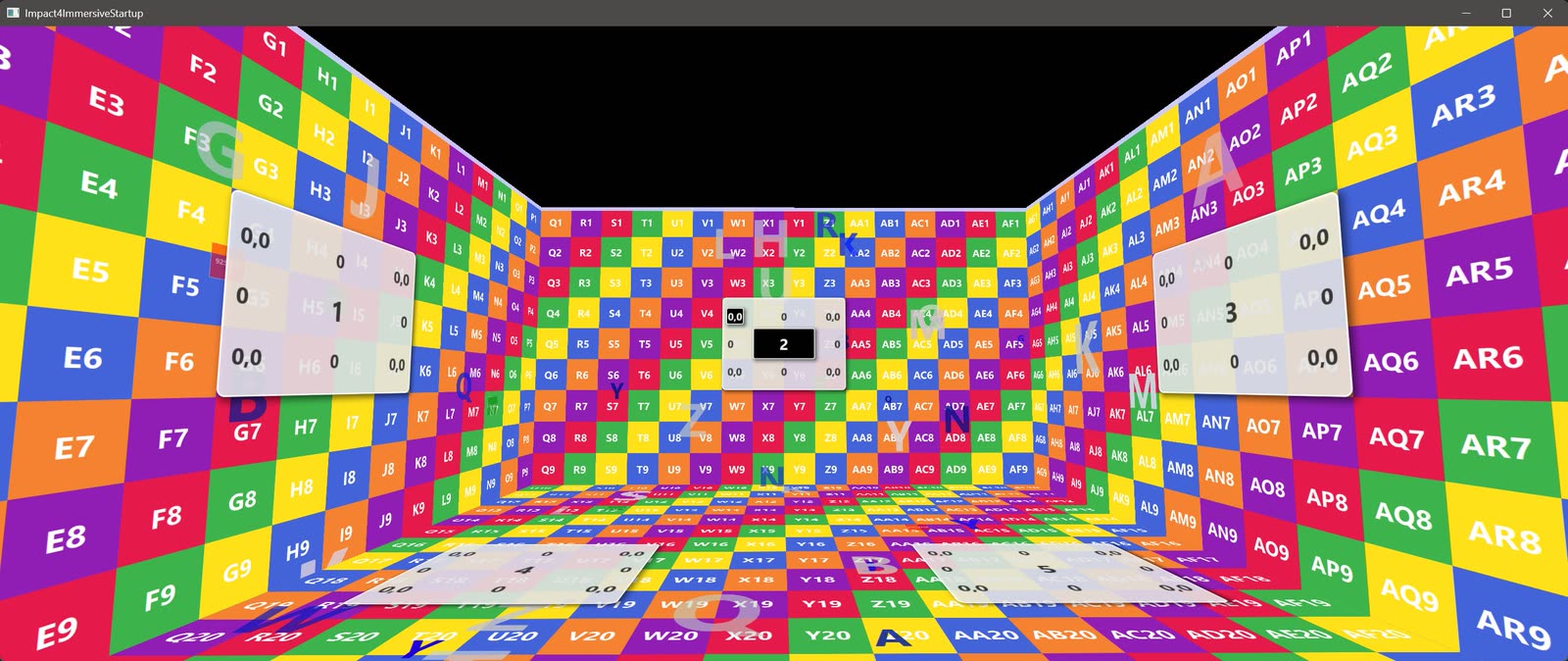
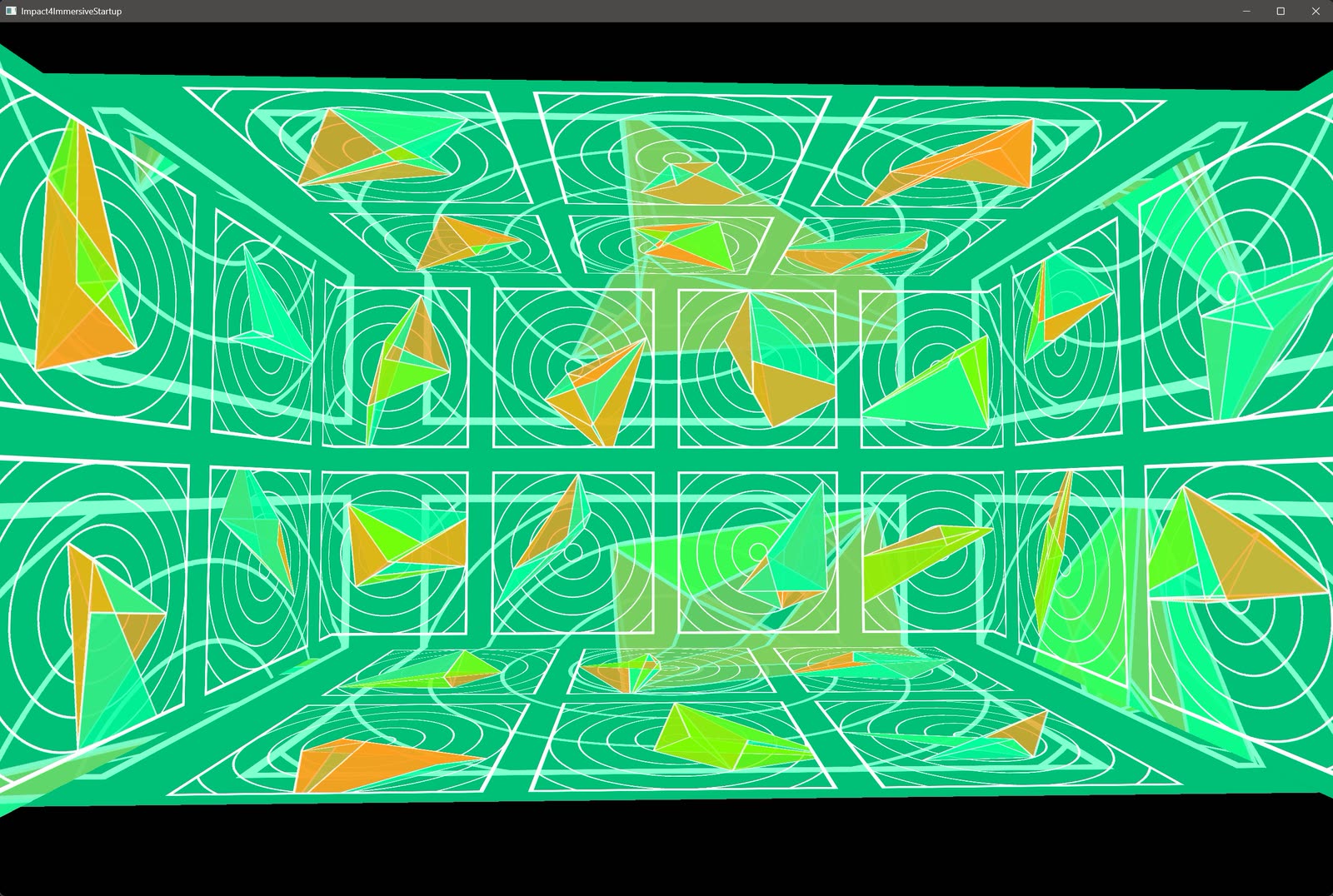
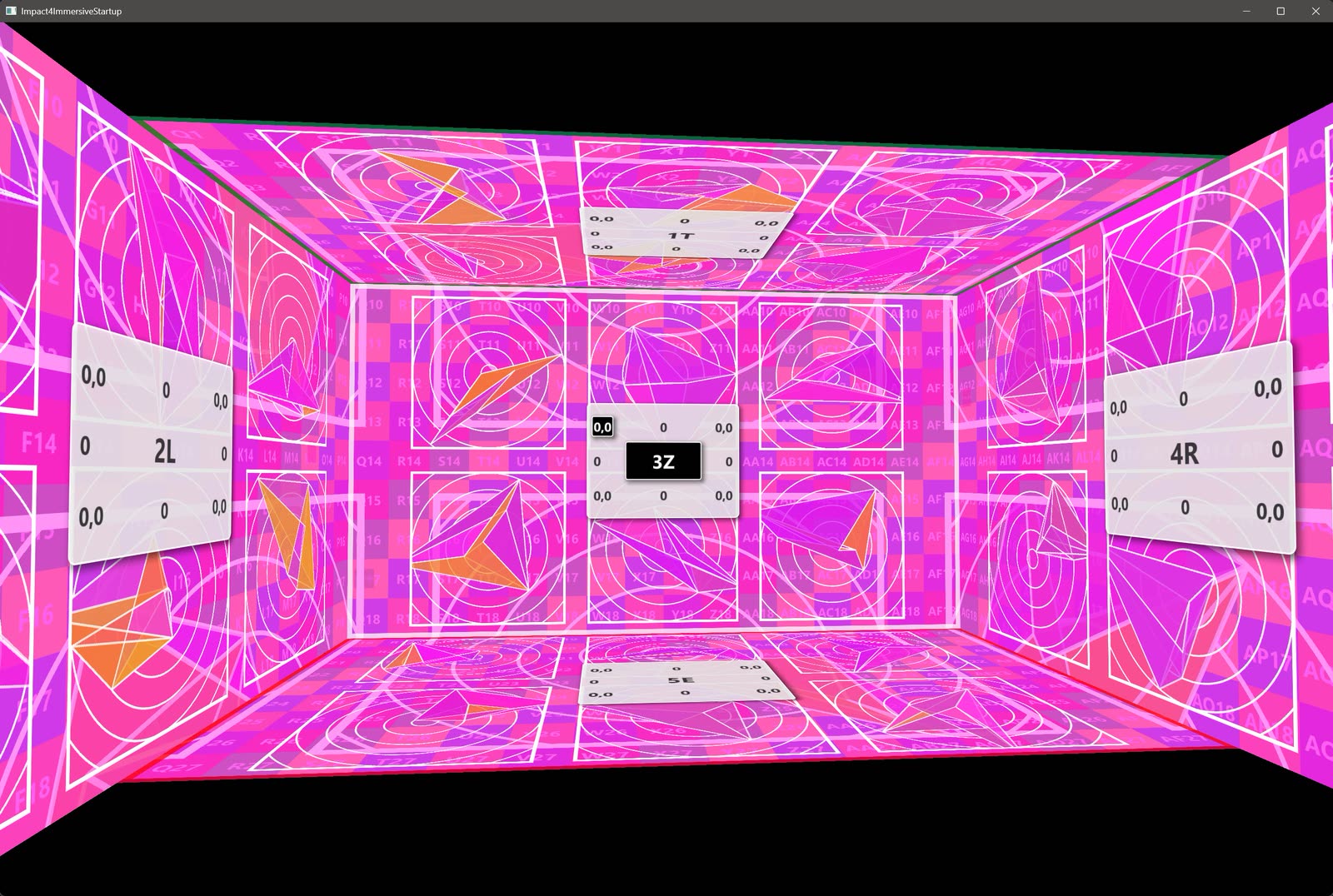
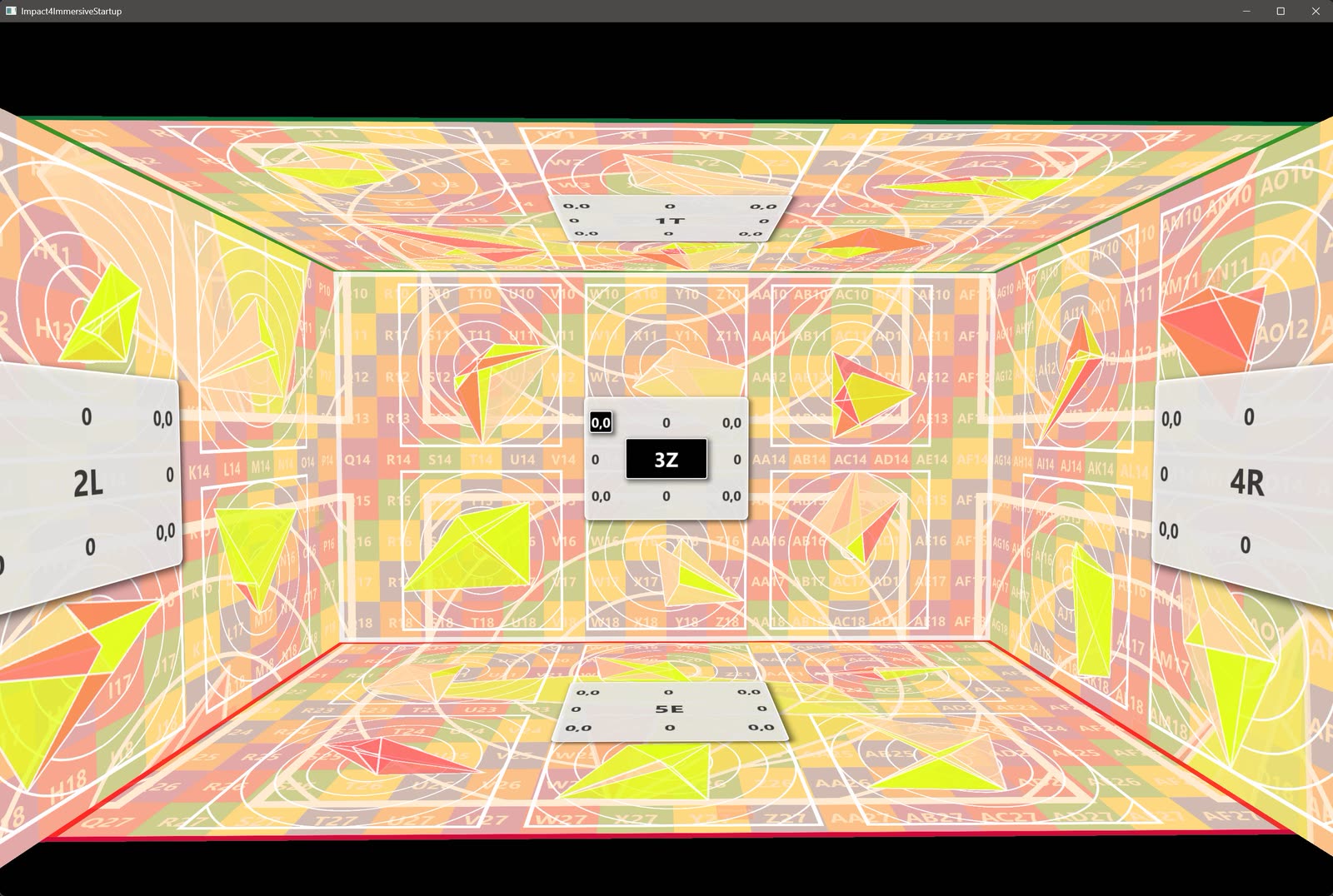
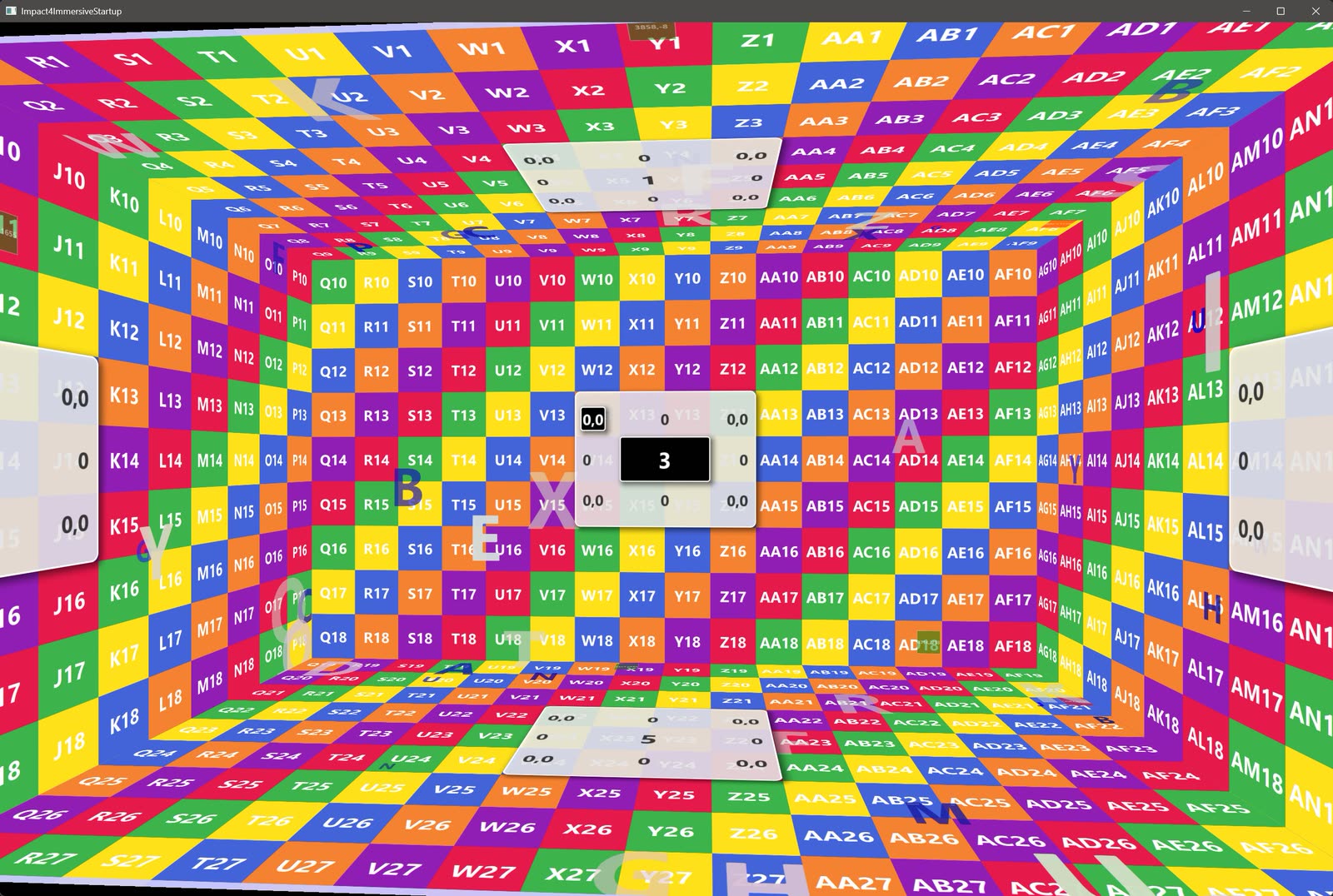
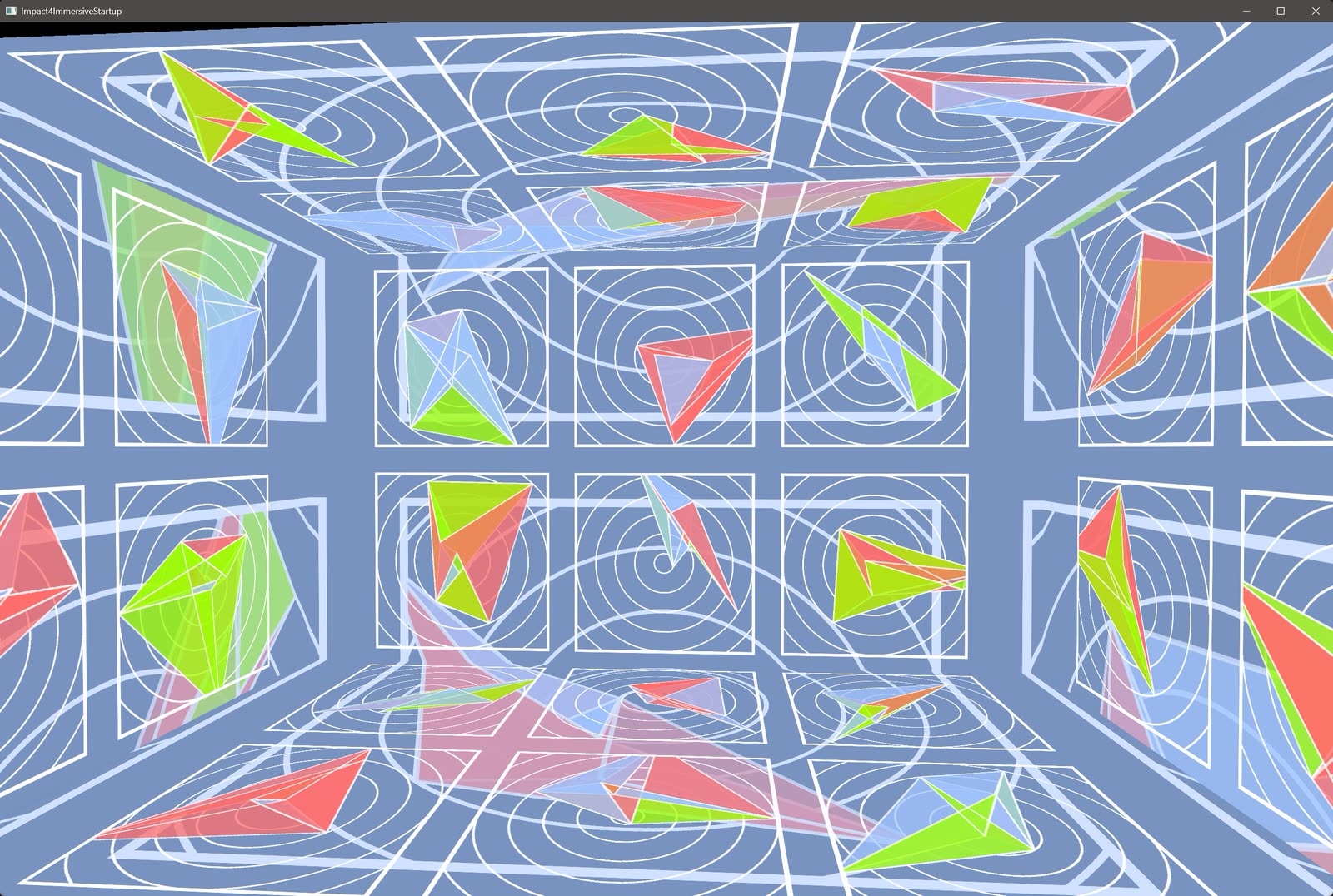
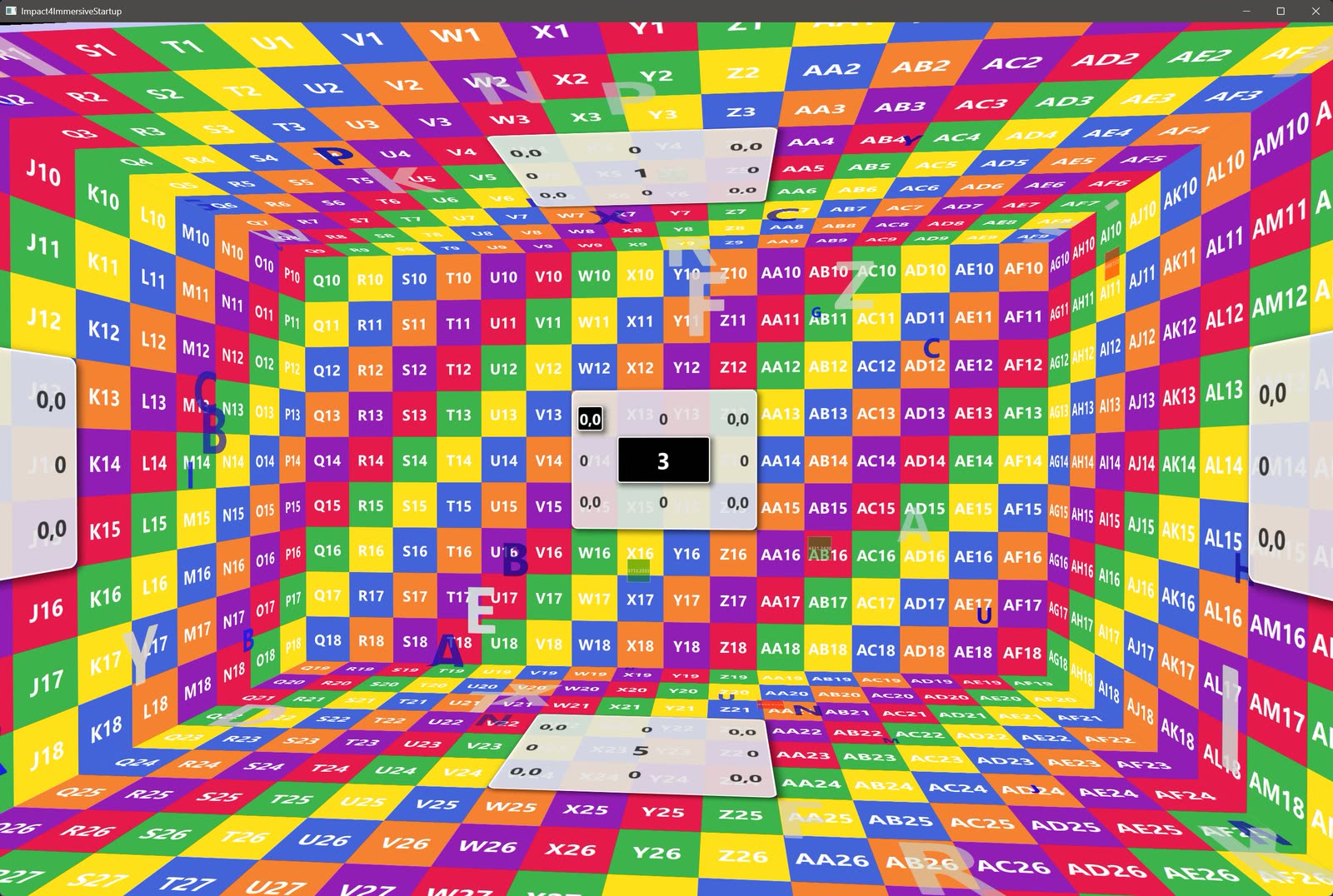
Multi-channel image output and zone model The runtime provides an assignment model with which content can be placed deliberately on individual output surfaces. Projections are addressed as zones, for example main zone, left, right, floor or ceiling. Content can therefore not only be "mirrored" or "extended", but run as separate, coordinated image fields that take on different roles within the overall composition.
Mapping and adaptation to architecture For projector installations, the runtime contains functions for position and projection mapping, in order to fit projections to real architecture and room geometry. This concerns both the geometric fitting of image surfaces and the assignment of content along physical boundaries: edges, transitions, sight lines, ceiling or floor surfaces. In projects that do not meet standardised screen formats, mapping becomes the central technical precondition for precision in design.
Simulation of target environments To prepare and safeguard installations, the runtime supports the simulation of target environments with different screen setups. Screen topologies - number, resolution, position and logical zones - can be represented as a configuration, in order to test projects independently of the current setup, prepare variants and support changes of installation.
Device connection and spatial sensing The runtime integrates devices and external systems, among them 3D LiDAR scanners. Sensor data can be built into the scene logic in real time: as a data stream, as a spatial structure, or as a source of triggers and interaction. The runtime thereby becomes an interface between event in the room and image system - not as an add-on module, but within the execution layer itself.
Technical basis and programmable core The runtime is built on deliberate programming with adapted Qt, C++ and QML together with project-specific custom classes. Runtime behaviour, rendering, timing, device interfaces and project logic can thereby be brought together in one consistent architecture. The runtime is designed for stable continuous operation and is used as an independent execution instance, separate from the development environment and the authoring system.
2D and 3D content in one runtime system The runtime is designed for demanding 2D and 3D content. Image-based, planar design and spatial structures are processed and output within one shared system - suited to work that moves between painterly composition, graphic placement and spatial situation, or that carries these levels at once. Alongside projection setups with projectors, the impact4immersive runtime is also used for digital light art, in which several screens act as distributed image carriers - from single groups of monitors to large-scale multi-display arrangements. The runtime addresses every output surface per machine in fullscreen operation and treats them as a configurable topology of zones and target devices.
Projectors and screens The system is hardware-independent in the sense of an open orientation towards different installation environments: various screen and projector models, changing resolutions, changing graphics-card setups. For complex real-time content the runtime is designed for operation with powerful 3D graphics cards; multi-GPU configurations can be part of the architecture where output surfaces, render load or sensor integration require it. The runtime's function remains the same throughout: it joins a stable execution layer with a precise model of assignment and mapping - regardless of whether content becomes present in the room through projectors, displays or mixed setups.